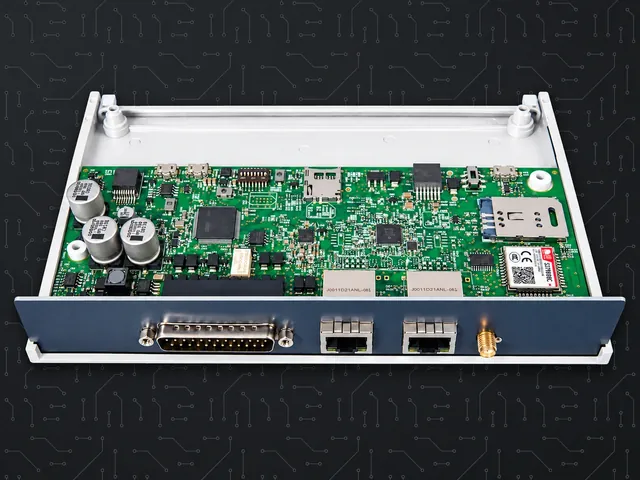
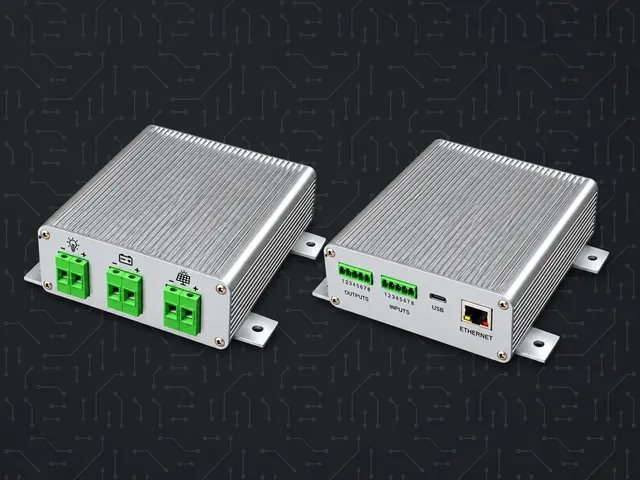
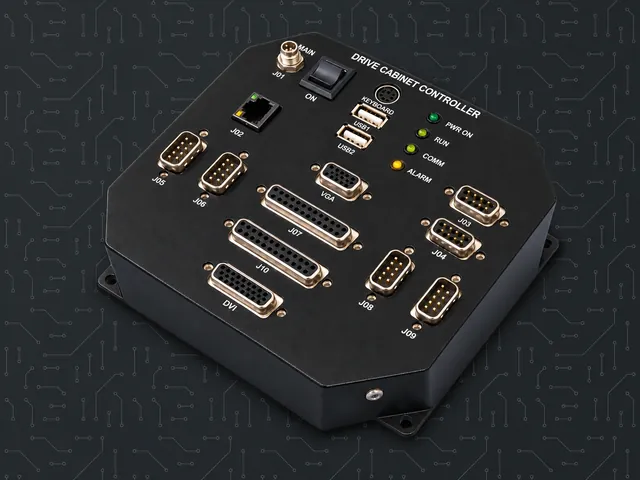
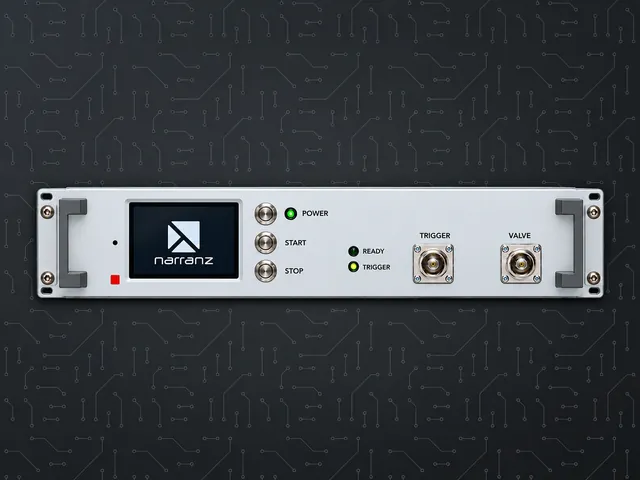
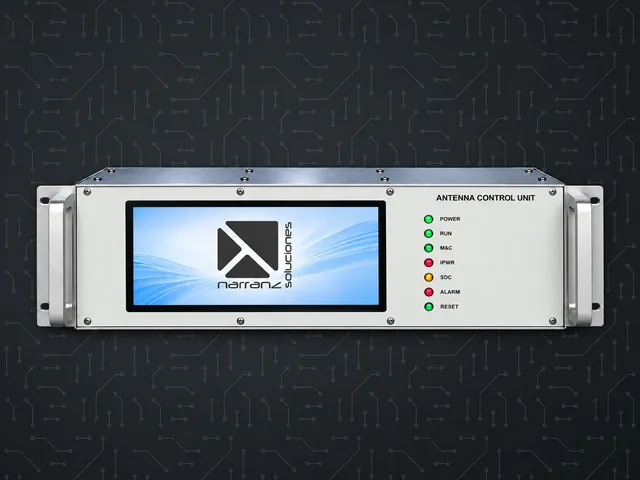
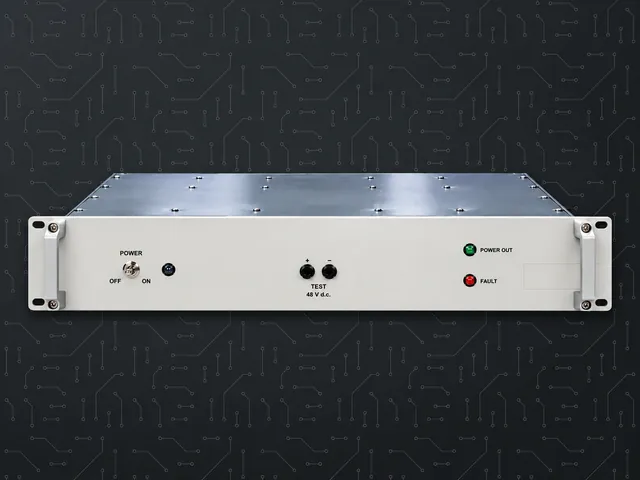
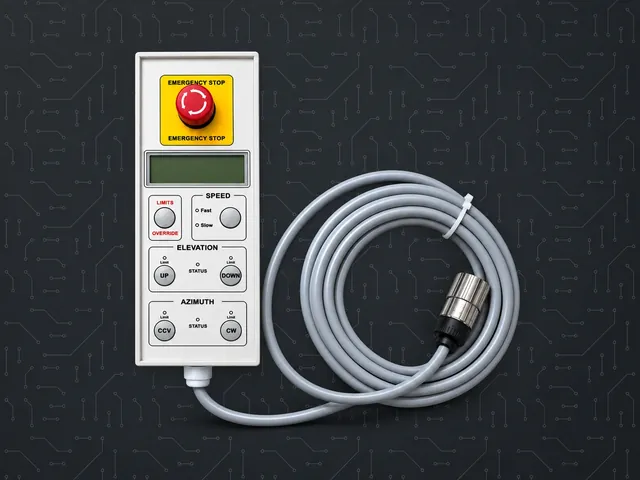
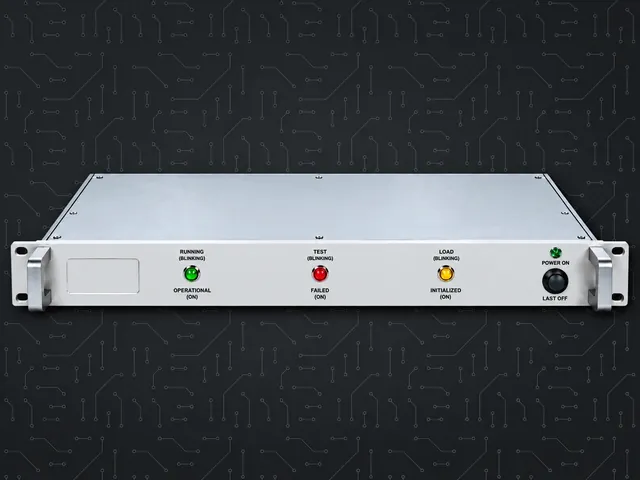
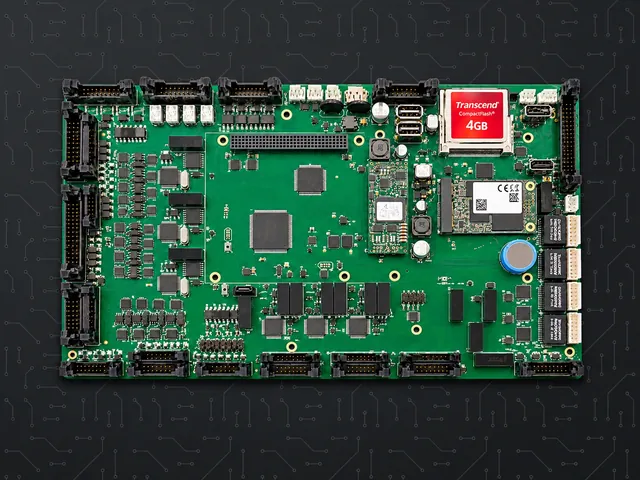
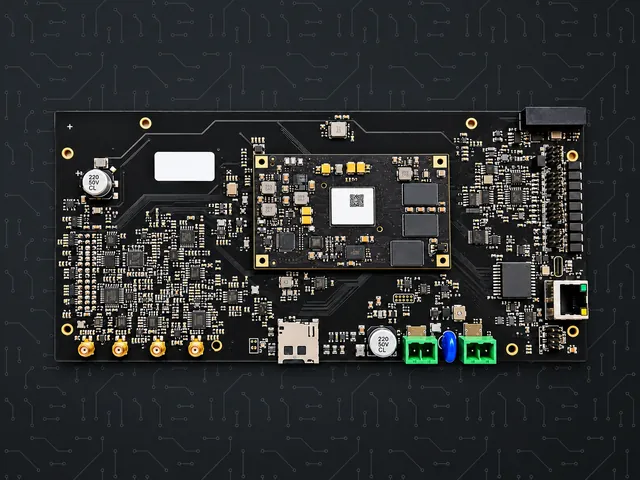
The system is built on an ARM architecture and uses MQX RTOS as its real-time operating system. It integrates EtherCAT, Ethernet, USB and RS485 communications, combining deterministic I/O control with configuration, diagnostics, maintenance and communication with auxiliary devices.
The platform brings sensors, actuators and industrial signals into an EtherCAT network, providing cyclic, real-time access to process variables.
EtherCAT industrial communication
The board features EtherCAT connectivity for integration into industrial control and automation networks.
EtherCAT provides high-speed, deterministic data exchange, particularly suited to applications that need short cycle times and precise synchronisation between devices.
The interface allows the board to be added as a node in an EtherCAT architecture and to exchange data cyclically with the system's main controller.
In this way, the board's physical inputs and outputs can be integrated directly into the automation process.
Digital inputs and outputs
The system provides digital inputs and outputs for connecting sensors, actuators and external elements.
The inputs acquire digital states from industrial devices, while the outputs can drive actuators, relays, indicators or other elements of the installation.
The ARM processor handles acquisition and updating of these signals and makes them available to the EtherCAT system for real-time exchange with the main controller.
Analogue inputs and outputs
The platform also features analogue inputs and outputs for signals that require the acquisition or generation of continuous values.
Local processing acquires the analogue signals and delivers their values to the control system over EtherCAT.
Real-time I/O access over EtherCAT
The EtherCAT interface provides cyclic access to the board's analogue and digital inputs and outputs.
Data exchange is designed so that the EtherCAT master can read the inputs and update the outputs within the network communication cycle.
This architecture allows the board to be used as a distributed remote I/O module, bringing acquisition and actuation closer to the physical location of the sensors and actuators.
This reduces wiring between the control cabinet and the field elements while retaining a centralised supervision system.
ARM-based processing
The system features an ARM processor that manages the platform's various functions.
In addition to I/O processing, the microprocessor manages the communication interfaces, hardware supervision, diagnostics and communication with external peripherals.
Local processing capacity keeps certain auxiliary functions separate from EtherCAT traffic and allows specific acquisition, filtering, supervision and diagnostic algorithms to run directly on the board.
MQX real-time operating system
The electronics use MQX RTOS as the embedded real-time operating system.
Using an RTOS allows the firmware to be structured into separate tasks handling the communication interfaces, signal acquisition, output control and auxiliary services.
This architecture supports concurrent execution of the different functions while keeping response times under control, which is particularly important in industrial automation and control applications.
Ethernet communication
In addition to EtherCAT, the processor has an Ethernet interface for complementary communication functions.
This connectivity can be used for configuration, diagnostics, supervision, maintenance or data exchange with other systems.
Separating standard Ethernet communications from the EtherCAT channel keeps real-time control functions independent of the platform's other communication services.
USB interface
A USB interface provides an additional channel for configuring, maintaining and diagnosing the unit.
It can be used during manufacturing, commissioning or maintenance to communicate directly with the electronics without accessing the industrial network.
The combination of USB, Ethernet and EtherCAT offers different ways of accessing the system according to the needs of each phase of the product life cycle.
Remote display over RS485
The ARM processor also drives a remote display over RS485.
RS485 allows the display to be installed at some distance from the main electronics and provides a robust interface for industrial environments.
The display can show information on system operation, I/O states, process parameters, alarms, diagnostic information or configuration data.
The user interface can thus be located on a panel or in an area accessible to the operator, while the EtherCAT electronics remain installed inside the electrical cabinet or close to the field elements.
Diagnostics and maintenance
The combination of local processing and multiple communication interfaces enables advanced system diagnostic functions.
The firmware can monitor the status of communications, inputs and outputs, peripherals and other internal operating parameters.
This information can be made available to the industrial controller or accessed over the Ethernet, USB or RS485 interfaces to simplify commissioning and maintenance.
Distributed control architecture
The board is conceived as a distributed control and acquisition element.
Sensors and actuators connect directly to its input and output interfaces, while EtherCAT provides the real-time link to the main control system.
This architecture is particularly suited to industrial machines and systems with several physically distributed groups of signals that require fast, deterministic communication.
Applications
The platform can be used in industrial automation, special-purpose machinery, test benches, data acquisition, distributed control, remote I/O modules, test systems, robotics, process control and Industry 4.0.
Its combination of EtherCAT, ARM, analogue and digital I/O, Ethernet, USB and RS485 allows the electronics to serve as a platform for developing different industrial devices on the same hardware architecture.
Technical specifications
| Main function | Industrial I/O module |
|---|---|
| Fieldbus | EtherCAT |
| Inputs | Analogue and digital |
| Outputs | Analogue and digital |
| Processor | ARM |
| Operating system | MQX RTOS |
| Real-time communication | EtherCAT |
| Additional communications | Ethernet / USB |
| Auxiliary interface | RS485 |
| User interface | Remote display over RS485 |
| Processing | Local / real time |
| Architecture | Distributed I/O |
| Applications | Industrial automation and control |