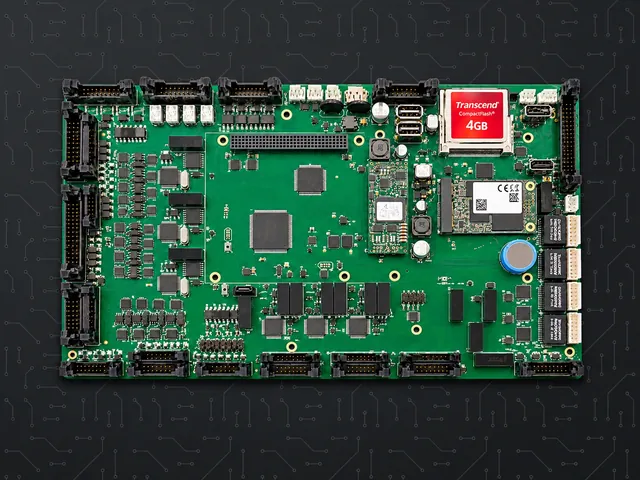
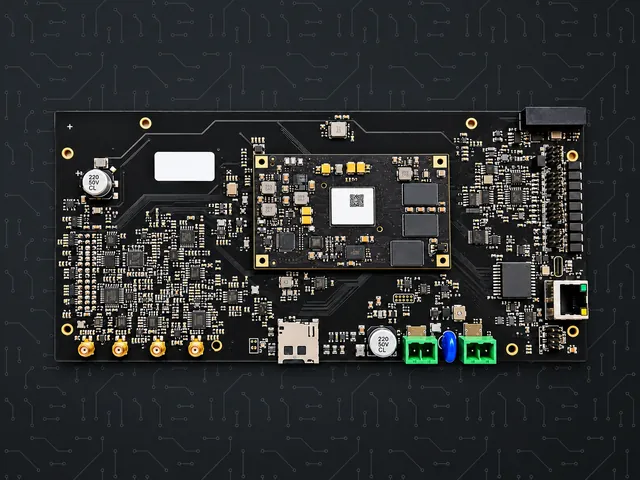
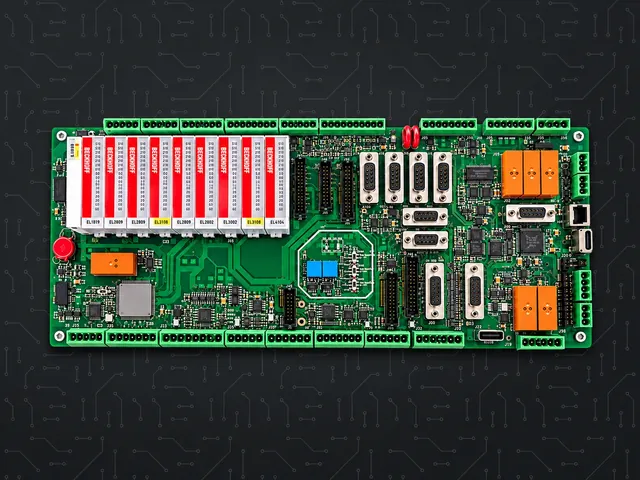
This gas valve controller works as a solenoid valve driver and programmable Hit-Hold generator: a 350 V valve driver that applies the pull-in pulse and holding phase with the precision a valve test bench demands. Its built-in SCPI server also makes it an SCPI controller, enabling Ethernet solenoid valve control from automation software.
The unit first generates a high-voltage pulse, configurable between 150 and 350 V, during the Hit phase, delivering the energy needed for fast valve actuation. It then switches to a holding voltage configurable between 12 and 36 V in Hold mode, reducing the applied power once the valve has been actuated.
The platform is based on a RISC-V architecture running FreeRTOS and features a 5-inch touchscreen, Ethernet, an embedded web server, an SCPI server, a USB-C interface with command Shell, an external TTL trigger input and physical push-button controls.
Valve control using a Hit-Hold strategy
The system uses a two-phase excitation strategy to control the valve:
- Trigger
- High-voltage HIT
- Holding HOLD
- Deactivation
During the Hit phase, the controller applies a short, high-voltage pulse to achieve fast valve activation.
Once the initial pulse ends, the system automatically switches to Hold mode, using a lower voltage to keep the valve energised for the configured time.
This strategy allows the energy applied during activation and during holding to be controlled independently.
Configurable Hit mode
The Hit phase voltage can be set between 150 and 350 V.
The pulse duration can be adjusted between 50 µs and 350 µs, so the excitation profile can be matched to the characteristics of the valve in use.
The two main parameters are therefore:
- Hit voltage: 150–350 V
- Hit time: 50–350 µs
Configuring voltage and time independently allows the initial energy applied to the valve to be tuned precisely.
Configurable Hold mode
When the Hit phase ends, the controller automatically switches to Hold mode.
In this phase, a holding voltage between 12 and 36 V can be selected.
The holding time can be set from 1 ms up to continuous operation, so the same controller can be used with different actuation strategies.
- Hold voltage: 12–36 V
- Hold time: from 1 ms to continuous
Configurable actuation sequences
Combining the Hit and Hold parameters makes it possible to define different actuation profiles depending on the valve and the application.
A typical sequence would be:
- Idle
- Trigger
- 250 V / 150 µs
- 24 V / Hold time
- Deactivation
All of these parameters can be managed through any of the interfaces available on the unit.
Multiple activation methods
The controller can start and stop the process from different interfaces.
The valve can be actuated using physical push buttons, from the touchscreen, via commands received over Ethernet or by an external signal on the TTL trigger input.
This flexibility means the unit can be used either stand-alone or integrated into test benches, machinery or automated systems.
External TTL trigger
The front panel features an external trigger input for synchronising valve actuation with other equipment.
Receiving the trigger can automatically start the previously configured Hit-Hold sequence.
This is particularly useful in systems where valve opening must be synchronised with external processes, acquisition systems or test equipment.
5-inch touchscreen
The controller features a 5” touchscreen for local operation and configuration.
The graphical interface can provide access to the main system parameters, including Hit voltage, Hit duration, Hold voltage, Hold duration, activation counter and operating states.
The display allows the unit to be operated stand-alone, with no external computer required.
Physical controls
In addition to the touchscreen, the front panel has physical START and STOP push buttons and visual indicators for power, status and trigger.
Combining a touch interface with physical controls gives quick access to the main functions during laboratory work, commissioning and maintenance.
RISC-V architecture
The system uses a RISC-V processor that coordinates Hit-Hold profile generation, the graphical interface, Ethernet communications, the web server, SCPI, the USB-C Shell, the trigger input and equipment supervision.
The embedded architecture performs all control functions locally, without relying on an external computer.
FreeRTOS operating system
The firmware is built on FreeRTOS, organising the controller functions into independent tasks.
The software architecture separates firing management, timing, the graphical interface, communications, the web server, SCPI, the service Shell and supervision functions.
This is especially important for correctly coordinating the events and timing associated with valve actuation.
Ethernet communications
The unit features Ethernet for integration into control networks and automation systems.
The interface provides remote access to configuration and control functions and allows the controller to be integrated into test benches or automated installations.
Two main interfaces run over Ethernet: a web server and an SCPI server.
Embedded web server
The controller includes an embedded web server that gives access to its functions from a browser.
The web interface can be used to configure parameters, control the unit, check its status and carry out maintenance tasks.
The web server also supports firmware updates, simplifying device maintenance.
SCPI server
The platform includes an SCPI (Standard Commands for Programmable Instruments) server for remote configuration and control.
SCPI makes it easy to integrate the controller with automation software, laboratory applications and test benches.
This interface is particularly well suited to automating test sequences and controlling the device from external applications.
USB-C with command Shell
The unit features a USB-C interface that provides access to a command Shell.
The console supports configuration, control, diagnostic and maintenance operations through commands.
It can also be used to update the device firmware, offering a local alternative to updating over Ethernet.
Firmware updates
The design includes several mechanisms for software maintenance and updates.
The firmware can be updated via:
- Ethernet / web server
- remote or local-network update
- USB-C / Shell
- local service update
This dual option simplifies both maintenance during development and updates once the unit has been installed.
Firing counter
The controller includes an activation or firing counter that records the number of cycles performed by the system.
This information is useful for preventive maintenance, valve characterisation, endurance testing and tracking equipment usage.
The system supports a partial counter reset, so counters can be started for individual test campaigns or cycles without necessarily losing the overall usage reference, depending on the firmware implementation.
Status monitoring
The display and LED indicators provide information on the operating status of the unit.
The front panel allows conditions such as power, system ready and trigger received/executed to be identified at a glance, simplifying diagnostics during use.
Test bench integration
The combination of TTL trigger, Ethernet, SCPI and configurable Hit-Hold parameters means the system can be easily integrated into automated test benches.
An external system can configure the parameters, generate the trigger, run the test, query the status and count the cycles performed.
The architecture supports both manual and automated operation.
Key advantages
- Valve control using a fully configurable Hit-Hold strategy
- Hit pulse adjustable between 150 and 350 V
- Hit duration configurable between 50 and 350 µs
- Hold voltage configurable between 12 and 36 V
- Hold time from 1 ms up to continuous operation
- Activation from push buttons, touchscreen, Ethernet or TTL trigger
- 5” touchscreen
- RISC-V + FreeRTOS architecture
- Embedded web server
- SCPI server for automation
- Shell via USB-C
- Firmware updates via Ethernet and USB-C
- Firing counter with partial reset
- Easy integration into test benches and automated systems
Applications
The unit is intended for controlling gas valves and solenoid valves, test benches, characterisation of electromagnetic actuators, laboratory automation and any system requiring configurable Hit-Hold excitation profiles.
Its integration capabilities via Ethernet, SCPI and external trigger also allow it to be used as a programmable instrument within automated test systems.
Technical specifications
| Equipment type | Hit-Hold valve controller |
|---|---|
| Architecture | RISC-V |
| Operating system | FreeRTOS |
| Control strategy | Configurable Hit-Hold |
| Hit voltage | 150–350 V |
| Hit time | 50–350 µs |
| Hold voltage | 12–36 V |
| Hold time | From 1 ms to continuous |
| Manual activation | START / STOP push buttons |
| HMI activation | Yes |
| Remote activation | Ethernet |
| External trigger | TTL |
| Display | 5” touchscreen |
| Communications | Ethernet |
| Web server | Integrated |
| Browser-based control | Yes |
| SCPI server | Integrated |
| External automation | Via SCPI |
| Service interface | USB-C |
| Console | Command Shell |
| Configuration via USB-C | Yes |
| Control via USB-C | Yes |
| Firmware update | Ethernet / USB-C |
| Firing counter | Yes |
| Partial counter reset | Yes |
| Indicators | Power / Ready / Trigger |
| Application | Valve control and test benches |