This industrial network monitor performs Ethernet network monitoring autonomously: as an Ethernet network monitor it provides continuous industrial Ethernet monitoring, Ethernet diagnostics and connectivity monitoring to safeguard network availability. Its status LEDs and local test simplify communications diagnostics without external tools.
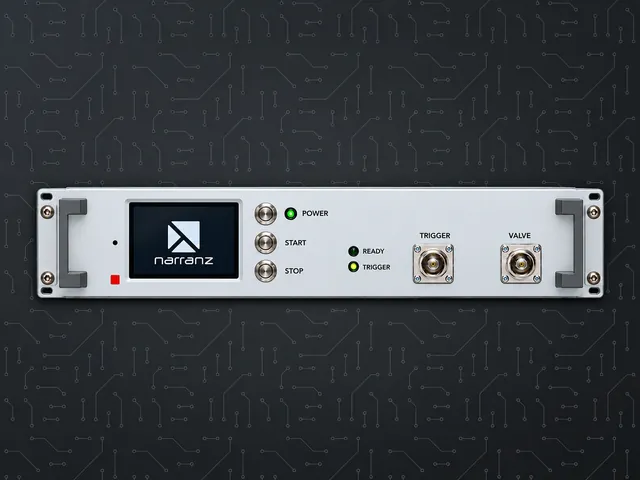
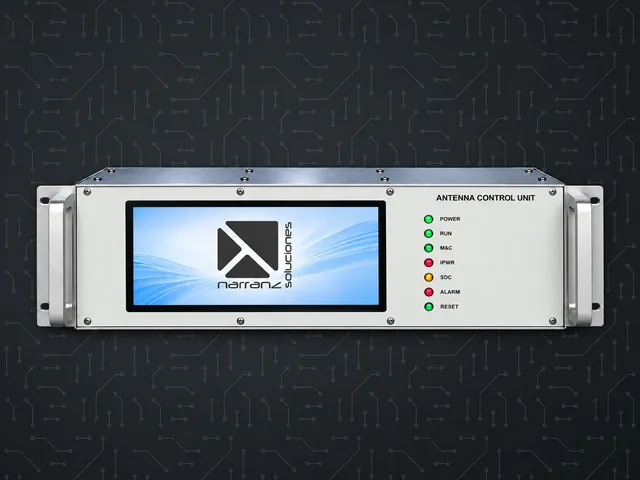
The unit features a front signalling panel with LED indicators that show at a glance the operating status of the system, test conditions, possible faults and initialisation status. A front push button allows local check and validation functions to be carried out.
Its embedded architecture keeps the communications infrastructure under permanent watch and detects anomalies or loss of connectivity, providing a dedicated solution for industrial network monitoring, control systems and installations that demand high communications availability.
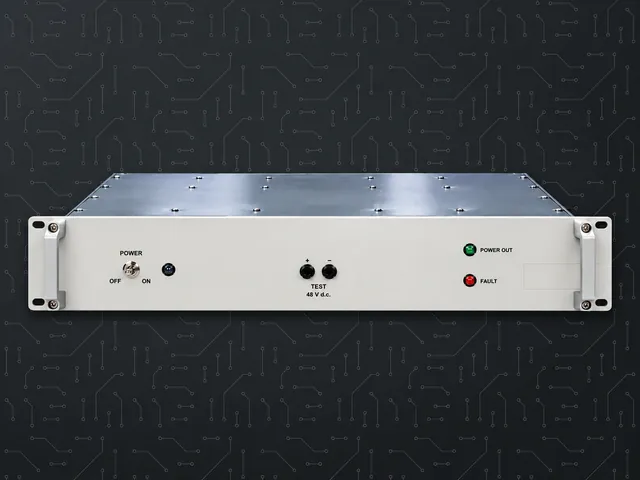
The system is housed in an industrial rack-mount chassis, making it easy to integrate into communications cabinets, control centres and technical infrastructure.
Ethernet connectivity monitoring
The Ethernet interface allows the device to connect directly to the communications infrastructure it is intended to monitor.
The system can periodically run check routines to verify link availability and the correct operation of the configured network elements.
Continuous monitoring makes it possible to identify loss of connectivity or abnormal conditions and to report the overall status of the communications.
Autonomous network monitoring
The unit is designed to carry out monitoring tasks autonomously, without relying permanently on an external computer.
The ARM processor runs the programmed diagnostic routines and evaluates the results to determine the operating status of the network.
This architecture allows the device to act as a stand-alone watchdog in installations where the availability of Ethernet communications is critical to system operation.
ARM architecture
The system uses an ARM processor that handles Ethernet communications, runs the diagnostic routines and drives the local signalling elements.
The embedded architecture provides a compact solution dedicated specifically to monitoring functions, avoiding the need for a full industrial PC to perform basic network surveillance tasks.
FreeRTOS operating system
The firmware is based on FreeRTOS, with the different functions organised as independent, timed tasks.
The real-time operating system simplifies periodic execution of network checks, event handling and control of the status indicators.
This architecture delivers predictable behaviour and keeps the Ethernet connectivity monitoring function running continuously.
Status LED indicators
The device features three test and status LED indicators, providing immediate visual information on system operation.
The indicators let technical staff quickly identify different operating states without connecting external diagnostic tools.
Depending on the firmware configuration, the LEDs can represent operating, communications, diagnostic or alarm states.
Local indicator test
A local validation push button allows the correct operation of the LED indicators to be checked manually.
When the test is activated, the system can run a check sequence on the signalling elements, simplifying preventive maintenance and making it possible to distinguish between a genuine status indication and a fault in the indicator itself.
This feature is particularly useful in units installed for long periods or in systems where visual indications form part of the diagnostic procedures.
Diagnostics and maintenance
The combination of Ethernet monitoring, local processing and visual indicators simplifies commissioning, diagnostics and maintenance of the communications infrastructure.
The device provides an independent reference for connectivity status and allows local checks to be carried out directly on the unit.
Maintenance staff thus get a quick indication of system status before resorting to additional diagnostic tools.
Continuous availability monitoring
The main purpose of the device is to help ensure the availability of the Ethernet communications the installation depends on.
Periodic monitoring detects communication interruptions or anomalies and generates the corresponding status so that the system can respond according to the defined strategy.
In industrial installations and technical infrastructure, this monitoring adds an extra layer of diagnostics and preventive network supervision.
Applications
The system can be used in industrial networks, automation, machinery, communications cabinets, technical infrastructure, control systems, remote installations and any equipment requiring permanent supervision of its Ethernet connectivity.
It can also be integrated as a diagnostic module within larger electronic systems to provide a dedicated network monitoring and availability-check function.
Technical specifications
| Main function | Network status monitoring |
|---|---|
| Architecture | ARM |
| Operating system | FreeRTOS |
| Communications | Ethernet |
| Monitoring | Network status and availability |
| Diagnostics | Autonomous |
| Indicators | 3 status/test LEDs |
| Local test | Validation push button |
| Operation | Continuous monitoring |
| Applications | Industrial networks and control systems |