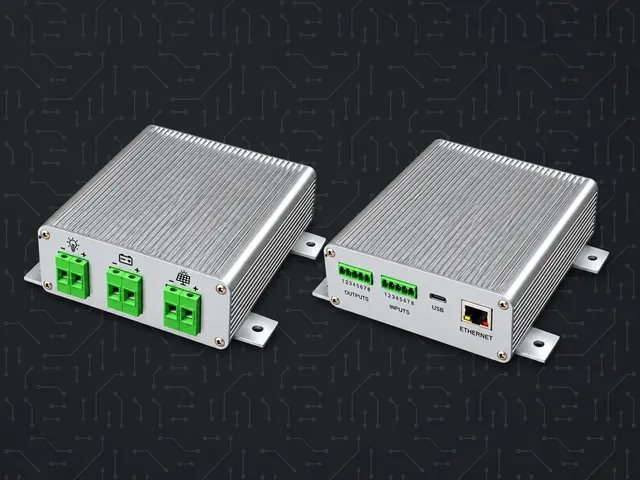
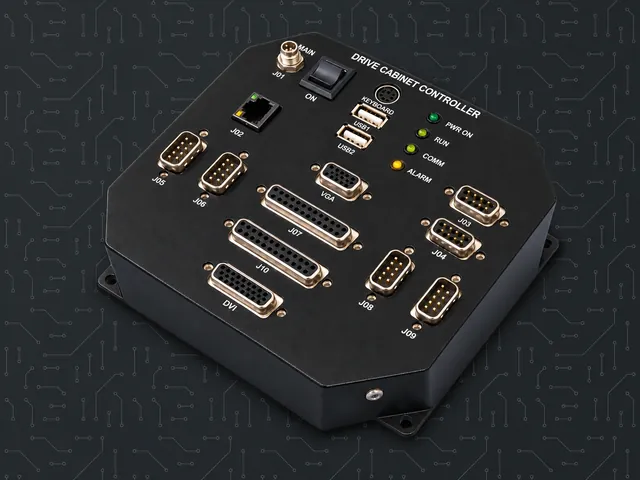
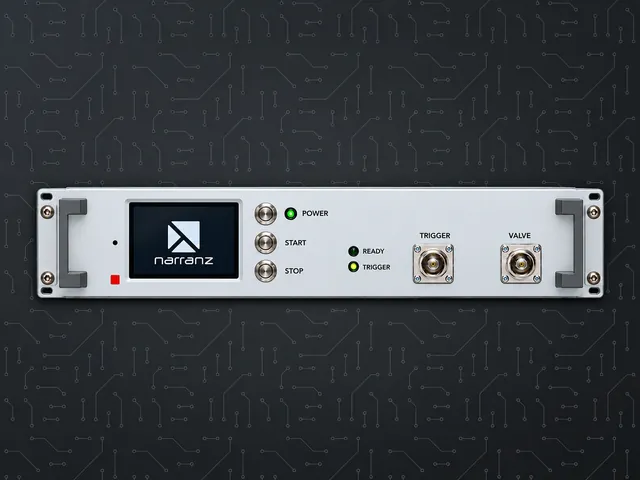
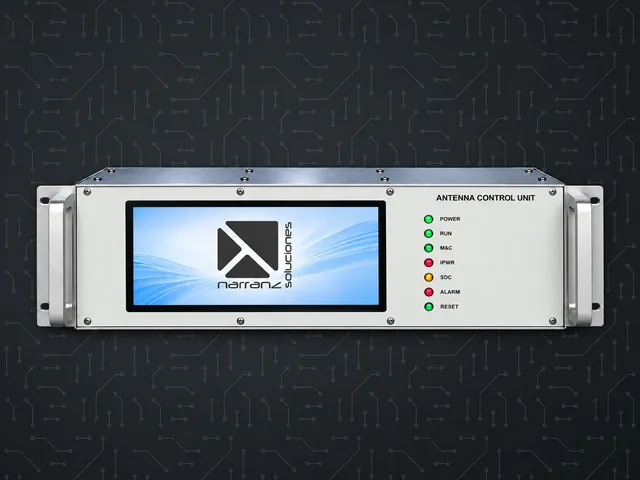
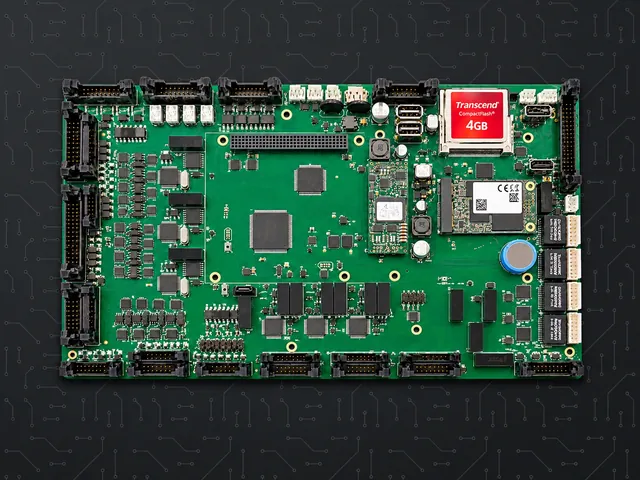
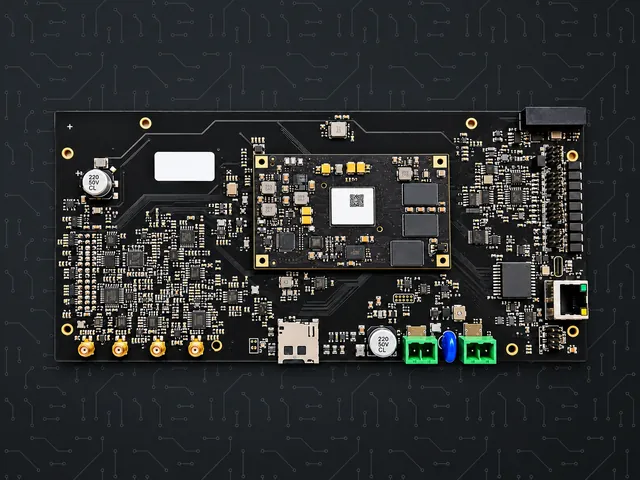
SOS call point electronics for any SOS emergency call point or emergency telephone: the system works as an Ethernet SOS call point or fibre optic SOS call point, with GSM emergency communication as backup. It integrates IP intercom functions, an audio amplifier and solar power, making it suitable for roadside SOS call points, a tunnel SOS system or any solar SOS call point within an emergency communications network.
The system is based on an ARM architecture running FreeRTOS and has been designed specifically for remote installations where communication availability, low power consumption and ease of integration into distributed infrastructure are key.
The electronics include a built-in Ethernet switch, enabling wired installations with a ring topology and avoiding the need for external switches and star cabling schemes. Depending on the project configuration, the unit can be fitted with Ethernet or fibre-optic communication interfaces.
The system also features a 10 W audio amplifier, SD card storage, backup GSM communications and power management for a solar panel and battery, with consumption below 5 mA in idle mode.
Voice communications for SOS call points
The unit is the core communications electronics of an SOS call point, handling voice transmission between the emergency point and the remote response or control system.
The main communication link can be established over an IP infrastructure using Ethernet or fibre optics.
If the main infrastructure becomes unavailable, GSM connectivity provides an alternative communication channel, increasing system availability.
In simplified form, the architecture can be represented as follows:
- SOS call point
- Ethernet / Fibre optics
- Control centre
with backup:
- SOS call point
- GSM
- Remote system
ARM architecture
The system uses an ARM platform to manage communications, audio processing, storage, unit supervision and control of the various peripherals.
An embedded architecture allows all the required functions to be integrated within the call point itself, reducing the need for additional equipment.
FreeRTOS operating system
The firmware is developed on FreeRTOS, organising the different functions into independent tasks.
The system can concurrently manage IP communications, the GSM channel, audio, storage, power supervision and the remaining peripherals.
This architecture supports autonomous, deterministic operation, which is especially important in equipment intended for emergency infrastructure.
Ethernet communications
The platform provides Ethernet communications for integration into wired IP networks.
Ethernet allows multiple SOS call points to be connected to the existing communications infrastructure and carries the necessary information between each terminal and the control centre.
The electronics also include switching functions that considerably simplify the deployment of multiple call points on the same infrastructure.
Built-in Ethernet switch
One of the unit's key differentiators is an Ethernet switch built directly into the electronics.
This allows units to be connected one after another in a daisy-chain or ring cabling infrastructure, so that each call point does not need its own connection back to a central switch.
Compared with a conventional star architecture:
- Central switch
- Call point 1
- Central switch
- Call point 2
- Central switch
- Call point 3
the electronics enable distributed schemes:
- Call point 1
- Call point 2
- Call point 3
- Call point 4
which can be adapted to a ring infrastructure where the implemented network architecture allows.
This reduces the cabling required and avoids installing additional Ethernet switches next to the call points.
Integration into ring networks
Having two network connections makes it easier to integrate the units into ring-based wired infrastructure.
This type of topology is particularly attractive for linear or distributed installations such as roads, tunnels, industrial facilities and large infrastructure.
The design reduces the amount of cabling and simplifies network expansion when new SOS points are added.
Ethernet or fibre optics
The platform can be configured to work with copper Ethernet or fibre-optic communications, depending on the characteristics of the installation.
Fibre optics are particularly advantageous in infrastructure with long distances between units or where electrical isolation from interference is required.
This modularity allows the same electronic platform to be used across different projects without modifying the main functional architecture.
Backup GSM communications
In addition to wired communications, the system includes GSM connectivity as an alternative channel.
The mobile link can serve as a backup to the main communications infrastructure, providing an additional path to keep the call point able to communicate in the event of certain faults on the wired network.
Having both systems side by side increases the flexibility and availability of the terminal.
Audio management
The system incorporates the electronics needed to handle the audio signals associated with voice communication.
The ARM processor coordinates audio input and output and its integration with the different communication channels.
This brings together on a single platform the communication, audio, storage and supervision functions required for the SOS call point to operate.
10 W audio amplifier
The electronics integrate a 10 W amplifier that drives the system loudspeaker directly.
The integrated amplifier removes the need for an additional external stage and simplifies the internal wiring of the call point.
The available power makes the system suitable for applications that require sufficient audio level for outdoor environments or noisy installations.
SD card storage
The unit includes an SD card for local storage of audio files.
This memory can hold messages, announcements and other audio resources needed for the terminal to operate.
Local storage allows certain audio clips to be played directly from the unit without having to download them repeatedly over the network.
Solar power
The system is designed to run from a solar panel, a particularly relevant feature for call points installed in locations with no mains power available.
The electronics include the management needed to work together with the power generation and storage system.
This makes it possible to build autonomous SOS call points for roads, remote installations and other distributed infrastructure.
Built-in battery charger
The unit incorporates a battery charger to manage the storage of energy from the power supply system.
The battery supplies power during periods without solar generation and keeps the system running when ambient conditions are not sufficient to power the unit directly.
The built-in charger reduces the number of external modules required inside the call point.
Ultra-low-power system
The electronics have been designed specifically to reduce consumption while the call point is waiting to be activated.
The system draws less than 5 mA in idle mode, which is especially important when the main power source is a solar panel and battery capacity is limited.
The unit can keep only the functions needed to detect events active and switch to a higher-power state when a communication is initiated.
Power management
The combination of low consumption, solar panel, battery and built-in charger results in a system with a high degree of energy autonomy.
The operating strategy can be structured into different states:
- Low-power idle mode
- Call point activation
- Communication set-up
- Voice communication
- Call end
- Return to low power
This behaviour makes it possible to optimise the sizing of the battery and photovoltaic system.
Reduced auxiliary infrastructure
Integrating multiple functions into a single set of electronics is one of the platform's main advantages.
The system incorporates:
- ARM processing
- IP communications
- Ethernet switch
- GSM
- audio
- amplifier
- SD storage
- power management
This integration reduces the amount of auxiliary equipment needed at each call point and simplifies both installation and maintenance.
Key advantages
- Voice transmission over Ethernet or fibre optics
- GSM as backup communication channel
- ARM architecture with FreeRTOS
- Built-in Ethernet switch
- Simplifies daisy-chain or ring wired networks
- Reduces the need for external switches
- Avoids star architectures with large amounts of cabling
- Ethernet or fibre-optic configuration
- Built-in 10 W audio amplifier
- SD card for local audio storage
- Solar panel and battery power
- Built-in battery charger
- Consumption below 5 mA in idle mode
- Compact platform for autonomous and remote installations
Applications
The platform is aimed particularly at SOS call points, emergency call points, roads, motorways, tunnels, industrial facilities, railway infrastructure and emergency communication systems at remote sites.
Its architecture can also be adapted to other intercom or IP communication systems that need to combine Ethernet or fibre, mobile backup and autonomous solar-powered operation.
Technical specifications
| Application | SOS call points / emergency communications |
|---|---|
| Architecture | ARM |
| Operating system | FreeRTOS |
| Main function | Voice transmission |
| Main communication | Ethernet / fibre optics |
| Backup communication | GSM |
| Ethernet switch | Built-in |
| Network topology | Supports daisy-chain/ring schemes |
| Fibre optics | Configuration available |
| Storage | SD card |
| Stored content | Audio files |
| Amplifier | Built-in |
| Audio power | 10 W |
| Power supply | Solar panel / battery |
| Battery charger | Built-in |
| Idle consumption | < 5 mA |
| Operation | Autonomous |
| Outdoor application | Infrastructure and SOS points |