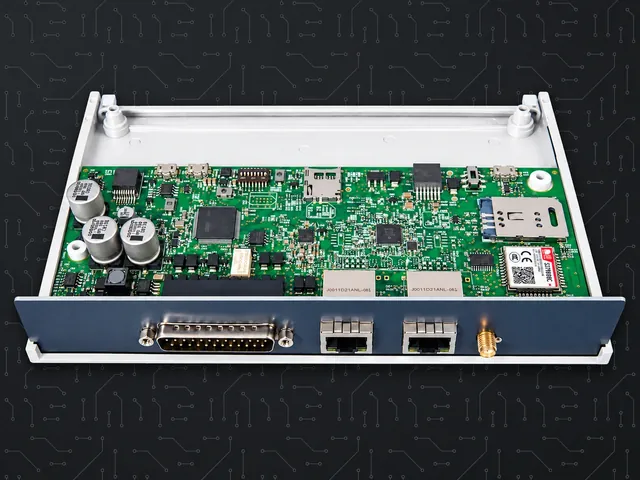
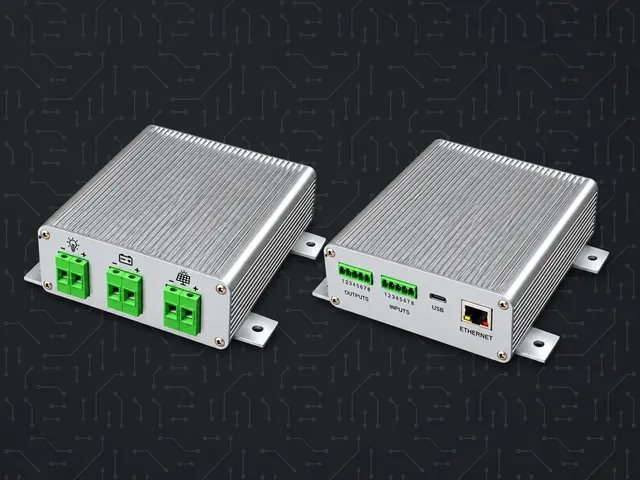
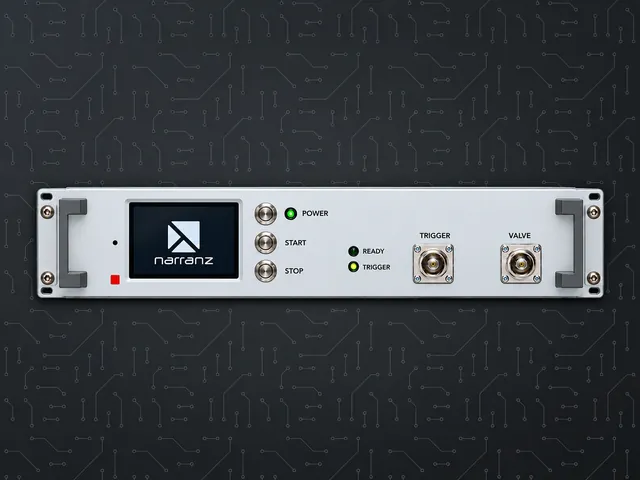
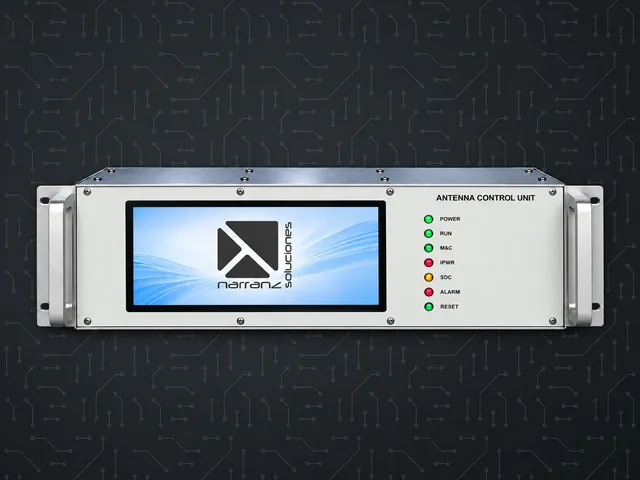
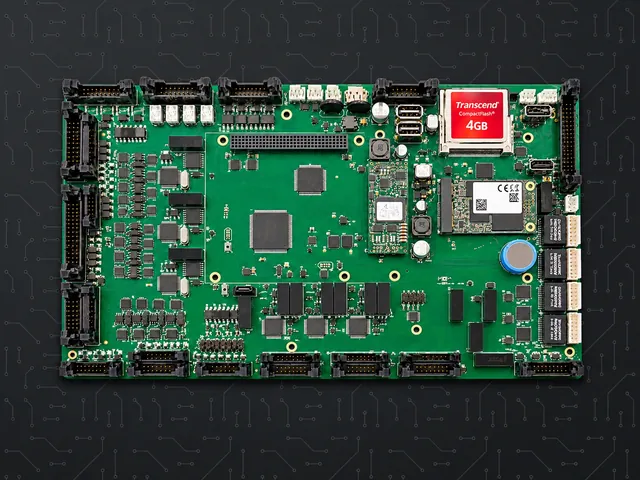
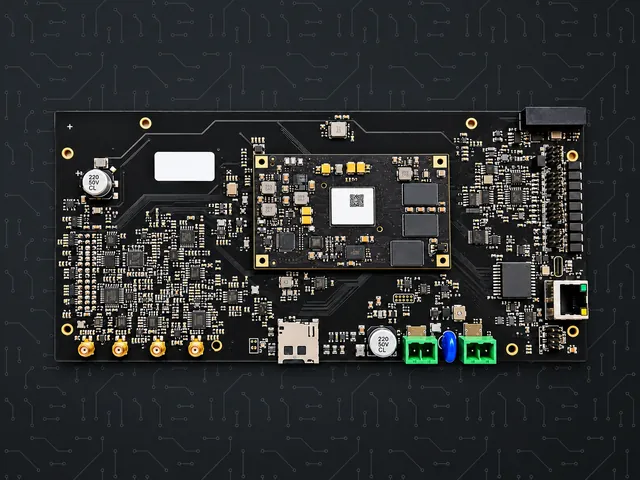
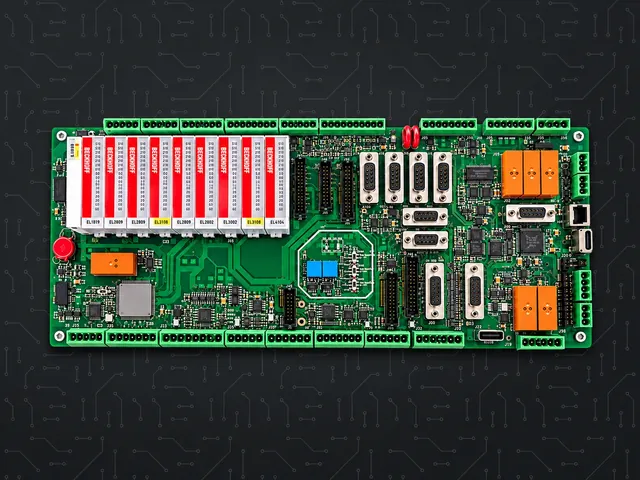
This x86 embedded system is an industrial COM Express controller designed to operate as a Linux industrial computer, a Windows embedded system or a QNX embedded system, depending on the requirements of each machine. As an industrial x86 controller and x86 control platform, it brings together the usual industrial embedded electronics in a single unit: industrial ADC DAC, RS232 RS485 serial communications, Ethernet, USB and industrial CompactFlash storage. The COM Express controller architecture separates processing from the carrier board, simplifying future upgrades.
The unit runs Linux, Windows or QNX, so the operating system can be matched to the needs of each application. It provides Ethernet, RS232, RS485 and USB communications, VGA and DVI video outputs, ADC and DAC converters for analogue signal acquisition and generation, and CompactFlash storage.
The platform accepts a wide 12 to 36 VDC supply range, making it easy to integrate into different industrial systems, vehicles and DC-powered installations.
The electronics are housed in a black-finished aluminium enclosure designed to play an active part in dissipating the heat generated by the COM Express module and the remaining components, resulting in a compact and rugged solution.
Modular COM Express architecture
The processing core of the system is an x86 COM Express module.
Using COM Express separates the processing module from the application-specific interface and peripheral electronics implemented on the carrier board.
The architecture can be represented as follows:
- x86 COM Express module
- Carrier Board
- Communications / ADC / DAC / Video / Storage / I/O
This approach provides a modular platform and makes it easier to adapt the system to different processing requirements without a complete redesign of the interface electronics.
x86 processing
The COM Express module delivers the processing power needed to run control, acquisition, communications and supervision applications.
The x86 architecture gives access to widely adopted software tools and environments, and makes it straightforward to run complex applications that need more processing resources than a conventional microcontroller can offer.
The unit can act as the central controller of a machine, bringing together communications, signal acquisition and peripheral management.
Linux / Windows / QNX operating system
The platform can be configured with Linux, Windows or QNX, so the most suitable operating system can be selected according to the requirements of each project.
Linux offers a flexible environment for embedded applications, communications, graphical interfaces, storage and network services. Its architecture makes it easy to customise the system and integrate dedicated software for industrial applications.
Windows offers a widespread environment compatible with a broad range of commercial applications, engineering tools, drivers, peripherals and third-party libraries. It is particularly well suited to systems requiring advanced graphical interfaces, HMI applications, configuration and diagnostic tools, databases or integration with software built on Microsoft technologies. The x86 architecture and the COM Express module also make it easier to run existing Windows applications, reducing the effort needed to migrate or integrate solutions originally developed for PCs.
QNX steers the platform towards applications that call for real-time operating system features, high robustness, high availability and deterministic behaviour. It is particularly suitable for control systems and embedded applications where response times are a critical requirement.
- Linux
- Flexibility, customisation and network services
- Windows
- Compatibility, HMI and industrial software ecosystem
- QNX
- Real time, robustness and determinism
Ethernet communications
The system features Ethernet connectivity for integration into industrial and corporate networks.
The interface exchanges data with other controllers, supervision systems, servers, diagnostic equipment and networked devices.
Ethernet can also be used for system configuration, maintenance and updates.
RS232 communications
The platform provides RS232 interfaces for connecting peripherals and equipment that use conventional serial communications.
This simplifies integration with existing devices and is particularly useful in projects where legacy interfaces must be retained.
RS485 communications
The RS485 interfaces allow industrial equipment to be integrated over robust differential communications.
RS485 is especially well suited to installations with longer distances between devices or environments subject to electrical interference.
The combination of Ethernet, RS232 and RS485 also allows the unit to operate as an industrial communications hub or gateway.
USB connectivity
The controller provides USB interfaces for connecting external peripherals, configuration devices or auxiliary equipment.
USB extends the expansion options of the system and simplifies maintenance tasks.
ADC converters
The electronics include analogue-to-digital converters (ADC) to acquire signals from sensors and other analogue devices.
Signals are digitised and processed by the x86 platform, so acquisition, monitoring and control functions can be implemented directly on the unit.
DAC converters
The system also includes digital-to-analogue converters (DAC) to generate software-controlled analogue signals.
Combining ADC and DAC allows the platform to be used as a complete analogue signal acquisition and generation system.
A typical architecture would be:
- Sensors
- ADC
- COM Express x86
- Control application
- DAC
- Actuators
CompactFlash storage
The platform uses CompactFlash memory as its local storage system.
The CompactFlash card can hold application data, configurations, historical data, operating logs and any other resources the system requires.
Local storage makes the controller self-contained and allows information to be retained without relying on external servers.
VGA and DVI video outputs
The system provides VGA and DVI graphics outputs for connecting monitors and displays directly.
This makes it easy to implement a local HMI, diagnostic applications, configuration tools or machine-specific graphical interfaces.
The video output can be managed directly from the Linux, Windows or QNX operating system.
Wide 12 to 36 VDC supply range
The electronics accept an input voltage between 12 and 36 VDC.
This wide range makes it easier to integrate the controller into different industrial infrastructures without a dedicated power supply for a single nominal voltage.
The power input supplies the internal voltages required by the COM Express module and the various integrated peripherals.
Industrial control platform
The combination of x86 processing, analogue interfaces and communications allows the device to serve as the main controller of industrial systems and machinery.
The unit can acquire sensor signals, process them in the application running on Linux, Windows or QNX, and act on external devices through the available interfaces.
The complete architecture can be summarised as:
- Sensors and peripherals
- ADC / RS232 / RS485 / Ethernet
- COM Express x86
- Linux/Windows/QNX
- DAC / communications / video
- External systems
Peripheral management
The range of interfaces allows devices using heterogeneous communication technologies to be connected.
The controller can centralise data from different subsystems and provide a common processing layer for the application.
This capability is particularly valuable in complex machinery that must simultaneously integrate sensors, actuators, serial peripherals, IP communications and a graphical interface.
LED indicators
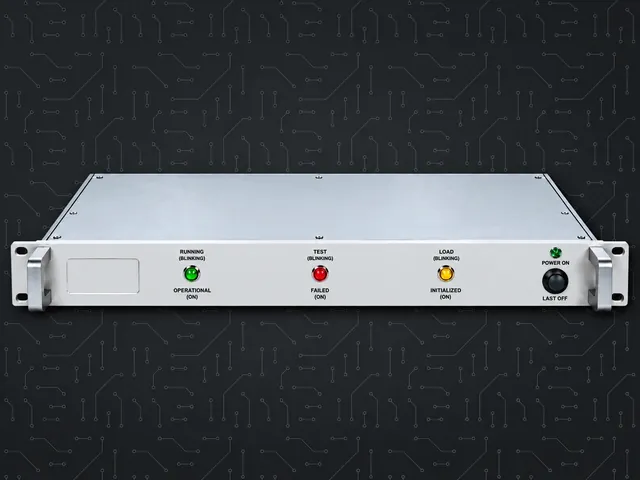
The unit features power and status LEDs that give immediate visual feedback on the operation of the controller.
The indicators simplify commissioning and diagnostics, allowing certain basic states to be checked without connecting external tools.
Passive thermal management
The COM Express module and the electronic components generate heat during operation.
To help remove it, the system uses the aluminium enclosure itself as a heat-dissipating element.
Transferring heat to the metal structure increases the surface area available to dissipate it into the surroundings and reduces the need for active cooling.
Rugged aluminium enclosure
The electronics are integrated into a black-finished aluminium enclosure designed to provide mechanical protection and contribute to thermal management.
This construction results in a compact unit suitable for installation inside machines, electrical cabinets and other industrial systems.
Modular and scalable architecture
One of the main advantages of COM Express is the ability to separate the application-specific electronics from the processing platform.
This allows the product to evolve using different compatible COM Express modules, matching processing power to the requirements of each project while minimising the impact on the carrier electronics.
The platform thus becomes a reusable foundation for successive generations of control systems.
Key advantages
- x86 processing via COM Express module
- Modular and scalable architecture
- Runs Linux, Windows or QNX
- Wide 12 to 36 VDC supply range
- Local CompactFlash storage
- Ethernet communications
- RS232 and RS485 interfaces
- USB connectivity
- Integrated ADC and DAC converters
- VGA and DVI video outputs
- Power and status LEDs
- Control, acquisition, storage and communications in one unit
- Passive cooling through the enclosure itself
- Rugged aluminium construction
- Suitable for integration into machinery and industrial systems
Applications
The system is aimed at industrial control, automated machinery, data acquisition, drive control, industrial gateways, supervision systems, railway electronics, peripheral control and high-performance embedded applications.
The combination of COM Express, x86, Linux/Windows/QNX, industrial communications, ADC/DAC and local storage allows the platform to be adapted to a wide variety of projects.
Technical specifications
| Equipment type | Industrial embedded controller |
|---|---|
| Architecture | x86 |
| Processing module | COM Express |
| Operating systems | Linux / Windows / QNX |
| Linux | Flexible environment for embedded systems, communications, network services and graphical interfaces |
| Windows | Compatibility with commercial software, HMI, drivers, engineering tools and Microsoft ecosystem applications |
| QNX | Real-time operating system for robust, deterministic control applications |
| Ethernet communications | Yes |
| RS232 communications | Yes |
| RS485 communications | Yes |
| USB | Yes |
| Analogue inputs | Integrated ADC |
| Analogue outputs | Integrated DAC |
| Analogue video output | VGA |
| Digital video output | DVI |
| Storage | CompactFlash |
| Power supply | 12–36 VDC |
| Indicators | Power and status LEDs |
| Local processing | Yes |
| Local graphical interface | Via VGA / DVI |
| Peripheral integration | Ethernet / RS232 / RS485 / USB |
| Signal acquisition | Via ADC converters |
| Signal generation | Via DAC converters |
| Cooling | Passive, fanless |
| Heat dissipation | Through the enclosure itself |
| Enclosure material | Aluminium |
| Finish | Anodised and painted black |
| Form factor | Compact embedded unit |
| Hardware architecture | COM Express module + dedicated carrier board |
| Main application | Industrial control, acquisition and communications |
| Application environment | Machinery, automation and industrial systems |
| Scalability | Through selection/upgrade of the COM Express module |
| Operation | Stand-alone / machine-integrated |
| Applications | Industrial control, data acquisition, gateways, HMI, supervision and peripheral control |