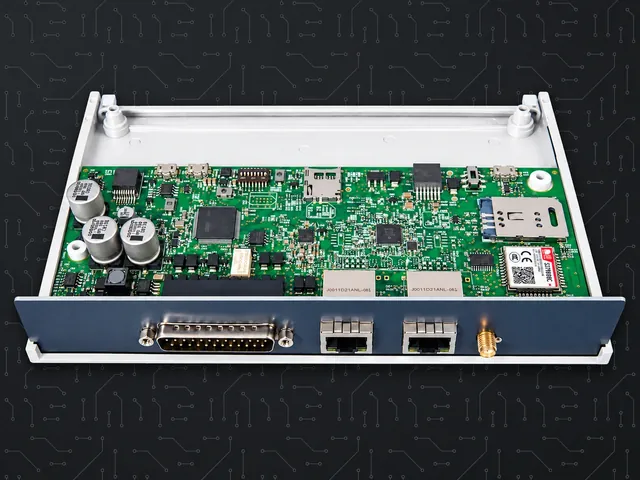
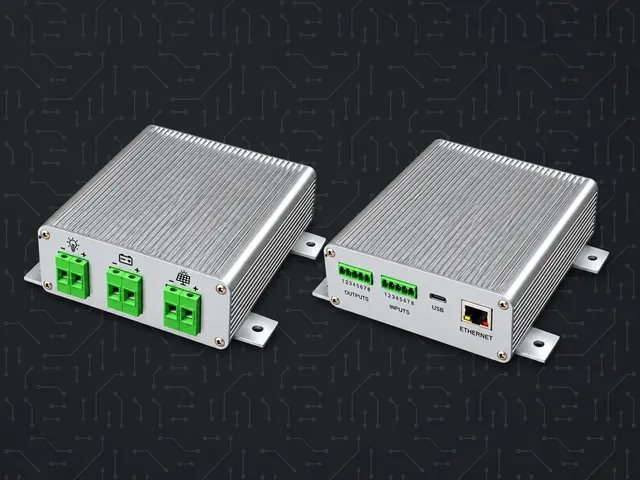
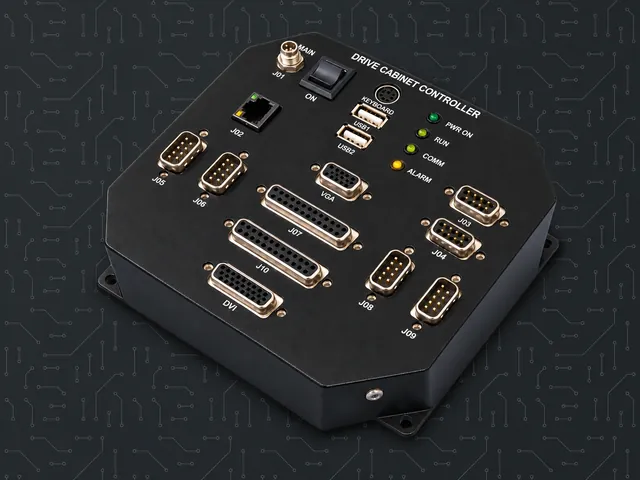
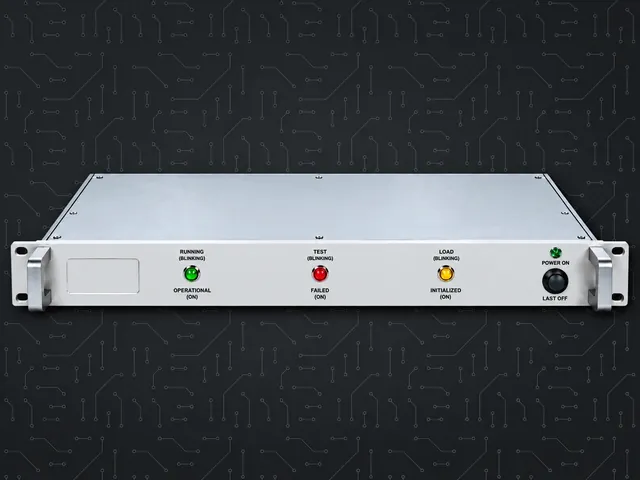
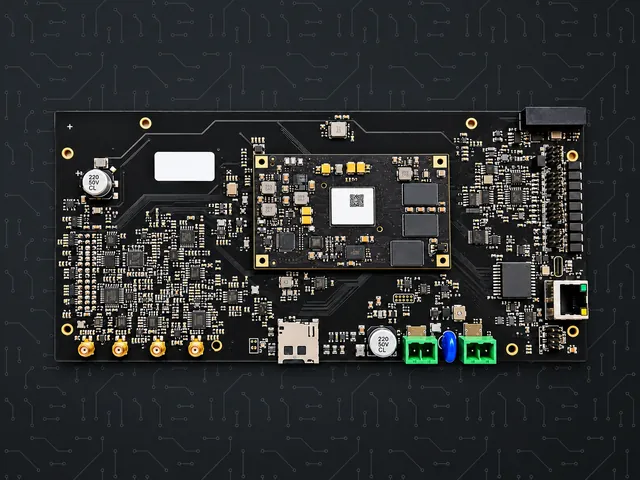
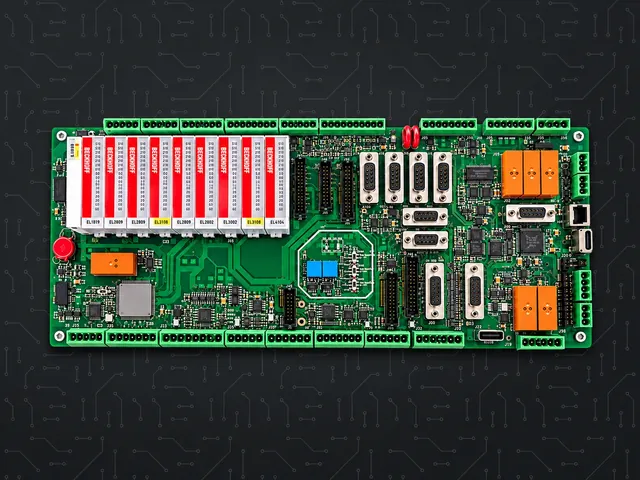
This industrial COM Express carrier board turns an x86 module into an embedded industrial computer and an industrial data acquisition board: isolated analogue I/O with a 24-bit ADC and 16-bit DAC, isolated RS485 and RS422, industrial Gigabit Ethernet, and embedded Linux or QNX on the x86 with FreeRTOS on the ARM. This blend of processing and real-time control makes it well suited to industrial Edge Computing and Industry 4.0.
The board integrates a wide range of interfaces: 4 Gigabit Ethernet ports, 12 isolated, configurable RS232/RS485/RS422 serial channels, high-resolution analogue inputs and outputs, digital I/O, relays, HDMI, DisplayPort, LVDS, PC/104, and mSATA and CompactFlash storage.
The architecture runs Linux or QNX on the x86 processor and FreeRTOS on the ARM subsystem, separating high-level applications from the functions that require deterministic behaviour and real-time control.
Heterogeneous x86 + ARM architecture
The system combines two complementary processing environments.
The x86 COM Express module provides the computing power needed to run advanced operating systems, graphical interfaces, network communications, storage, user applications and processing algorithms.
In parallel, the ARM subsystem running FreeRTOS handles critical acquisition tasks, signal supervision, peripheral control and processes that require deterministic response times.
This separation brings together the flexibility of an x86 industrial computer and the advantages of a real-time embedded controller on a single platform.
COM Express module
Using a COM Express Computer-on-Module provides a modular architecture and makes it easy to upgrade processing power without completely redesigning the interface electronics.
The module contains the processor, memory and main system resources, while the carrier board provides the interfaces specific to the application.
This architecture is particularly well suited to industrial equipment with long life cycles, as the processor can be upgraded while retaining most of the product's electronic design and interfaces.
Linux and QNX
The x86 processor can run Linux or QNX, so the platform can be tailored to the needs of each application.
Embedded Linux provides a flexible environment for communications, graphical interfaces, storage, processing and Edge applications.
QNX is suited to systems that require a real-time-oriented, robust operating environment with deterministic behaviour.
The ARM subsystem runs FreeRTOS, providing a second real-time execution layer for direct control of specific interfaces and peripherals.
4 Gigabit Ethernet ports
The platform features up to 4 Gigabit Ethernet (1 GbE) interfaces.
Multiple Ethernet interfaces make it possible to physically separate networks and build architectures with independent connections for control, supervision, maintenance or communication with other equipment.
This makes industrial Gigabit Ethernet particularly valuable for industrial gateways, machine controllers, Edge systems and equipment acting as an interconnection point between several networks.
12 isolated RS232 / RS485 / RS422 interfaces
The system provides up to 12 isolated serial communication channels, configurable as RS232, RS485 or RS422.
The configuration can be changed at runtime, so each channel can be adapted to different devices and protocols without physically modifying the hardware.
Galvanic isolation makes communications more robust and protects the different electronic domains against potential differences and disturbances found in industrial installations.
This high port density allows instrumentation, sensors, actuators, controllers and legacy equipment to be connected simultaneously to a single platform.
High-resolution analogue acquisition
The board features 12 isolated analogue input channels with a 24-bit ADC, intended for applications that require high-precision signal acquisition.
The high resolution makes it possible to digitise small variations in signals from sensors and instrumentation.
Channel isolation helps reduce problems caused by ground loops, potential differences and interference between the acquisition electronics and external equipment.
The platform can serve as the basis for data acquisition, instrumentation, monitoring and industrial process control systems.
12 x 16-bit analogue outputs
The system also provides 12 isolated analogue output channels with 16-bit resolution.
These outputs generate precision analogue signals to control external equipment, set references, drive actuators or interface with instrumentation.
The combination of 12 x 24-bit ADC inputs and 12 x 16-bit DAC outputs provides a complete platform for both acquiring and generating analogue signals.
Configurable digital inputs
The electronics include 8 configurable digital inputs for acquiring states from sensors, contacts, external equipment and process signals.
These inputs can be managed by the control system and used to trigger events, alarms or specific actions within the application.
Integration with the ARM subsystem allows local supervision and response mechanisms to be implemented without relying solely on the operating system running on the x86 processor.
Relay outputs
The platform provides 8 relay outputs, divided into:
- 4 solid-state relays (SSR), suitable for applications requiring fast switching and long service life
4 electromechanical relays, intended for applications that require galvanic isolation through a physical contact and the ability to switch different types of load.
This combination offers flexibility to control actuators, signalling, equipment power and other external elements.
HDMI, DisplayPort and LVDS video interfaces
The platform provides several video interfaces to suit both off-the-shelf monitors and displays integrated into the equipment itself.
The HDMI and DisplayPort outputs connect high-resolution external monitors, while the LVDS interface allows LCD panels to be integrated directly into embedded systems.
This enables equipment with a local HMI, graphical operator interfaces, diagnostic panels and industrial visualisation systems.
mSATA and CompactFlash storage
The electronics provide mSATA and CompactFlash storage interfaces, offering different options for the operating system, applications and persistent data storage.
Local storage can hold configurations, databases, acquisition history, operating records, alarms and logs.
The choice of storage technologies allows the configuration to be matched to the capacity, performance and life-cycle requirements of each application.
PC/104 interface
A PC/104 interface provides additional expansion capability and compatibility with specialised industrial hardware.
This interface allows additional acquisition, communications or control modules to be added when the needs of a particular application exceed the functions built into the board.
Combining COM Express and PC/104 gives a particularly flexible architecture for developing different product variants on a common platform.
Edge processing and real-time control
One of the main advantages of the platform is the ability to distribute functions across the different processors.
The x86 system can run high-level applications, storage, graphical interfaces, algorithms, databases and communications, while the ARM handles deterministic control, signal acquisition and real-time I/O supervision.
This architecture processes information directly on the equipment before passing it to higher-level systems, making the platform well suited to Industrial Edge Computing applications.
Applications
The platform is particularly suited to industrial automation, machine control, data acquisition, test benches, industrial gateways, HMI systems, instrumentation, process control, test systems, Edge Computing and Industry 4.0.
Its combination of high processing power, industrial communications, precision analogue acquisition and extensive I/O allows a single electronic architecture to serve as the basis for several families of equipment.
Technical specifications
| Main architecture | COM Express |
|---|---|
| Main processor | x86 |
| Real-time processor | ARM |
| x86 OS | Linux / QNX |
| ARM OS | FreeRTOS |
| Ethernet | 4 × Gigabit Ethernet |
| Serial ports | 12 × RS232 / RS485 / RS422 |
| Serial isolation | Yes |
| Serial configuration | Dynamic / at runtime |
| Analogue inputs | 12 isolated channels |
| ADC resolution | 24 bits |
| Analogue outputs | 12 isolated channels |
| DAC resolution | 16 bits |
| Digital inputs | 8 configurable |
| Relay outputs | 8 |
| SSR relays | 4 |
| Electromechanical relays | 4 |
| Video | HDMI / DisplayPort / LVDS |
| Storage | mSATA / CompactFlash |
| Expansion | PC/104 |
| Applications | Control, DAQ, HMI, gateway and Edge Computing |