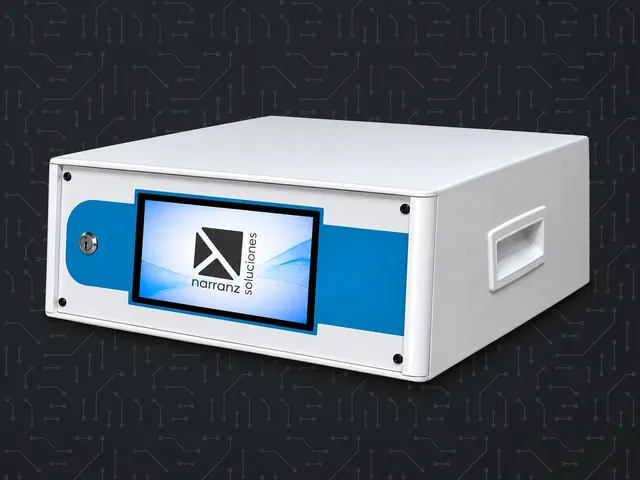
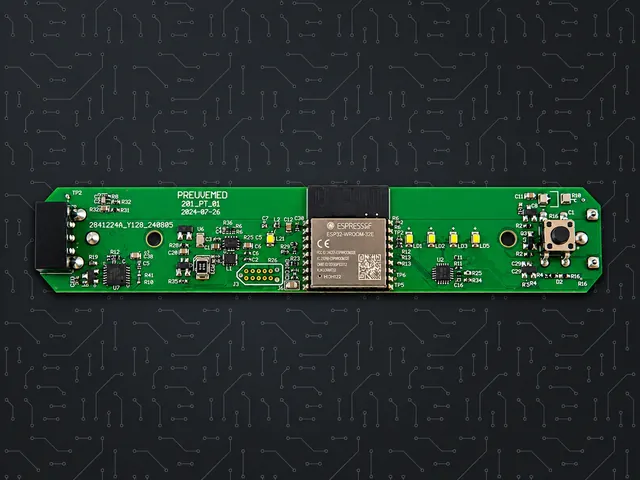
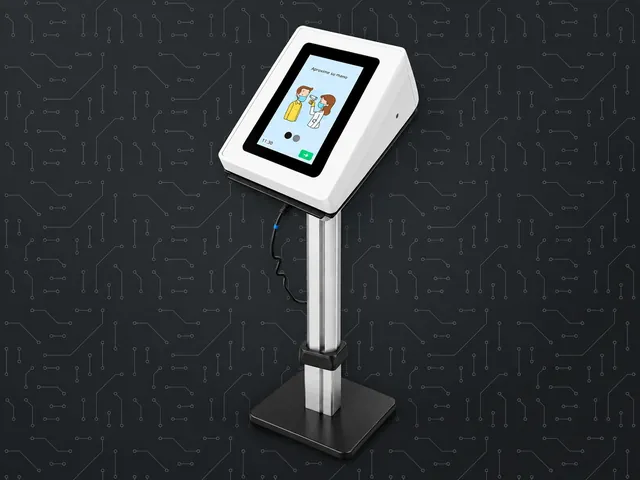
This blood pressure monitor gateway turns a commercial device into a connected blood pressure monitor. Using USB HID and GPRS telemetry, each reading is sent over the mobile network for remote blood pressure transmission to the remote patient monitoring platform, with store and forward buffering ensuring that blood pressure monitor telemetry continues even when coverage is lost.
The system connects to the blood pressure monitor through a USB Host port with an HID interface, receives the data generated by the device and transmits it over the mobile network.
The platform is based on an ARM architecture running the MQX operating system and includes local storage to retain readings during temporary loss of connectivity, sending them once communications become available again.
Connectivity for commercial blood pressure monitors
The purpose of the device is to provide telemetry capability to blood pressure monitors that originally offer only a local USB interface.
The module acts as a gateway between the blood pressure monitor and the remote system:
- Blood pressure monitor
- USB/HID
- ARM gateway
- 2G/GPRS
- Server
Readings can therefore be transferred automatically, without the user having to enter the results manually into another device.
USB Host with HID interface
The electronics include USB Host functionality, so the commercial blood pressure monitor can be connected directly.
Communication takes place over an HID (Human Interface Device) interface compatible with the protocol used by the monitor.
The ARM controller receives the readings supplied by the monitor, interprets the relevant information and prepares the data for storage and transmission.
This architecture keeps the blood pressure monitor as a stand-alone device and adds connectivity through an external module.
Automatic transmission of readings
As soon as a new reading is received, the device can automatically start transmitting it to the remote server over the mobile connection.
This reduces user intervention and makes it easier to integrate the monitor into remote patient monitoring and remote data acquisition systems.
The architecture is designed so that connectivity is transparent to the normal operation of the blood pressure monitor.
2G/GPRS communications
The device incorporates a 2G/GPRS mobile modem to transmit data over the cellular network.
This connectivity allows the system to be installed without relying on a local Ethernet or Wi-Fi network.
Storage during loss of coverage
A particularly important feature is the ability to store readings locally when there is no mobile connectivity.
If a transmission cannot be completed, the reading remains stored on the device instead of being discarded.
When communication is restored, the system can resume sending the pending information.
Operation can be summarised as follows:
- New reading
- local storage
- transmission attempt
- confirmation
If there is no connectivity:
- New reading
- local storage
- wait
- network recovery
- retransmission
This mechanism makes the system more robust in locations with patchy mobile coverage.
ARM architecture
The system is based on an ARM processor that coordinates USB communications, reception of readings, storage and the mobile connection.
Local processing allows the entire flow of information between the blood pressure monitor and the server to be managed autonomously.
MQX operating system
The firmware uses MQX as its real-time operating system.
The various functions can be organised into independent tasks that manage the USB Host, mobile communications, storage, transmission retries and system supervision.
This architecture supports continuous operation and allows the different device states to be controlled in an orderly manner.
Store & Forward
Combining local storage with mobile communications makes it possible to implement a Store & Forward architecture.
Readings are kept locally until the conditions needed to transmit them successfully are met.
This approach ensures that a temporary communications outage does not automatically result in the loss of acquired data.
Applications
The system is aimed at connecting commercial blood pressure monitors, telemetry, remote data acquisition and upgrading existing equipment by means of communication gateways.
The same technology architecture can be adapted to other instruments that output their results over USB and need remote transmission without modifying their original electronics.
Technical specifications
| Function | Telemetry gateway |
|---|---|
| Connected device | Commercial blood pressure monitor |
| Architecture | ARM |
| Operating system | MQX |
| Monitor interface | USB |
| USB mode | Host |
| USB interface | HID |
| Mobile communications | 2G / GPRS |
| Transmission | Automatic |
| Local storage | Yes |
| Loss of coverage | Readings retained |
| Connection recovery | Pending readings resent |
| Data architecture | Store & Forward |