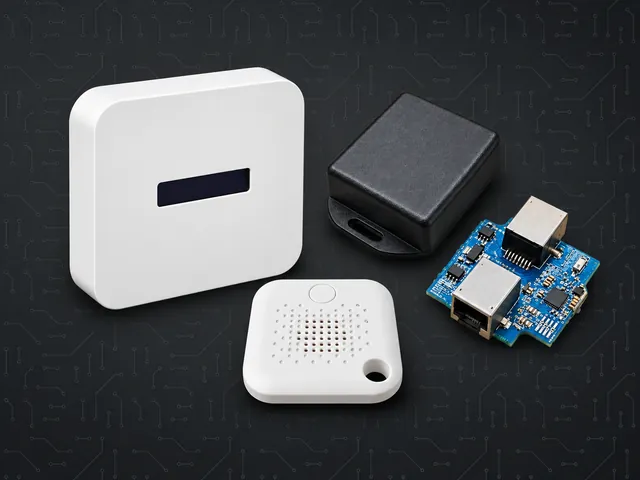
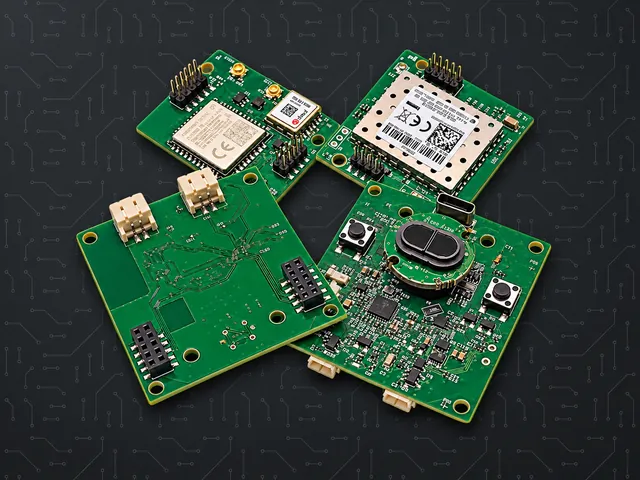
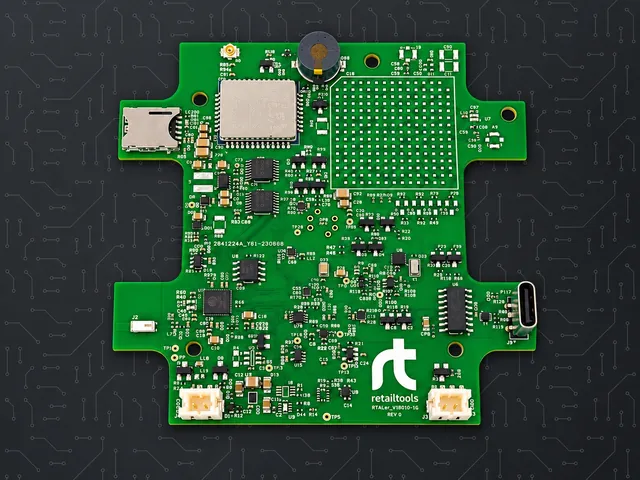
This cold chain temperature data logger with 4G and GPS is built for cold chain monitoring in transport: a 4G data logger that handles refrigerated vehicle temperature monitoring and adds GPS tracking for refrigerated transport. It works as a GPS temperature logger and supports Bluetooth temperature sensors, so temperature telemetry and cold chain traceability are maintained throughout refrigerated transport monitoring. As a temperature data logger, it keeps recording locally even without coverage.
The unit features 4G mobile communications, GPS and LBS positioning, Bluetooth connectivity, internal and external temperature sensors with a resolution of up to 0.1 °C, an accelerometer and a light sensor.
Its local storage keeps a history of measurements even during temporary loss of mobile coverage. Once the connection is restored, the stored records can be sent to the server, ensuring continuous cold chain traceability.
The device also includes a rechargeable lithium-ion battery, an integrated USB charger, a built-in antenna, easy SIM card access via a push-pull mechanism and two RGB LEDs indicating device and charging status.
Cold chain monitoring
The data logger is designed specifically for tracking refrigerated vehicles and goods, continuously recording temperature conditions during transport.
Measurements can be stored locally and transmitted over 4G to a remote platform, showing both the current status and the temperature history of the shipment.
Combining temperature, positioning and communications allows each measurement to be linked to the vehicle's location, building a complete history of the route.
High-resolution temperature measurement
The unit works with internal and external temperature sensors, achieving a measurement resolution of up to 0.1 °C.
The internal sensor monitors conditions around the device itself, while external sensors can be installed at specific points in the refrigerated compartment.
The ability to use several sensors allows the installation to be adapted to the thermal layout of the monitored vehicle or enclosure.
External sensors over Bluetooth
The device features Bluetooth to communicate with remote Bluetooth temperature sensors, reducing the need for wiring inside the vehicle.
This architecture allows sensors to be distributed at different positions within the refrigerated compartment, with their measurements centralised in the data logger.
The unit thus acts as an IoT gateway, gathering information from the sensors and then transmitting it over 4G to the server.
4G communications
4G connectivity transmits the device's measurements and status to a remote platform in near real time.
The system can report temperature, position, alarms, events and device status, enabling centralised supervision of a vehicle fleet.
Mobile connectivity removes any dependence on Wi-Fi or Ethernet infrastructure in the vehicle.
GPS and LBS positioning
The device features GPS to obtain the vehicle's geographical position and associate it with the recorded measurements.
It also supports LBS (Location Based Services) positioning, providing an alternative based on the mobile network infrastructure when conditions prevent a reliable GPS fix.
Combining GPS and LBS improves the availability of location information across different usage scenarios.
Temperature and position traceability
One of the main advantages of the system is the ability to link each temperature measurement with time and location information.
This produces records of the following type:
- Date and time
- Temperature
- Position
- Status
- Events
The remote platform can use this information to display routes, analyse history and detect possible incidents during transport.
File system and local storage
The data logger features a high-capacity file system for local storage of measurements, events and operating logs.
This storage makes the unit independent of mobile coverage.
If the vehicle passes through an area without 4G connectivity, measurements continue to be logged locally and remain available for later transmission.
Store & Forward operation
Communications are managed on a Store & Forward basis, which is particularly important in mobile applications.
Under normal conditions:
- Measurement
- Local logging
- 4G transmission
- Server
When coverage is lost:
- Measurement
- Local logging
- Storage
- Coverage restored
- Pending data sent
As a result, a temporary communications outage does not mean losing the temperature history.
Impact detection with accelerometer
The unit features an acceleration sensor capable of detecting knocks or impacts received by the device or by the item on which it is installed.
Detected events can be recorded together with date, position and temperature information.
This complements thermal monitoring with information on certain mechanical conditions experienced during transport.
Light sensor for door-opening detection
The data logger has a light sensor that can detect changes in light level inside the compartment where it is installed.
When the device is in a normally closed, dark area, an increase in light level can be taken as an indication of a possible door opening or access to the compartment.
The event can be recorded and, when connectivity is available, reported to the remote system.
Event logging
In addition to temperature measurements, the unit can record various transport-related events.
The history can therefore combine temperature, location, impacts, light changes and communications status, giving a fuller picture of the conditions experienced along the route.
Built-in antenna
The antenna is built into the device itself, simplifying installation and avoiding the need for external antennas in standard configurations.
Integrating communications, positioning and antenna in a single electronic unit results in a compact device designed for mobile installations.
SIM card handling
The SIM card has a push-pull ejection mechanism, making installation, replacement and maintenance easier.
This simplifies commissioning and allows the SIM to be replaced without complex work on the electronics.
Rechargeable lithium-ion battery
The data logger features a rechargeable lithium-ion battery that keeps the device running autonomously.
This is particularly important in transport applications, where the unit may need to keep logging regardless of the vehicle's power supply status.
Integrated USB charger
The electronics include the circuitry needed to manage battery charging over USB.
The USB connection powers the device and charges the internal battery without a dedicated external charger.
Two RGB LED indicators
The device features two RGB LEDs that provide visual information on its operation.
Different colours and sequences can represent the data logger's operating status, connectivity, acquisition, alarms and battery charge status.
This gives the installer a quick way to check the basic status of the unit without accessing the remote platform.
Remote supervision
The combination of sensors and 4G communications allows the data logger to be integrated into a centralised platform for refrigerated transport monitoring.
The server can receive measurements periodically and present them as history, alarms and routes.
This architecture simplifies management of multiple devices distributed across a fleet.
Alarm generation
Alarms can be configured from the acquired data for various operating conditions, such as temperatures outside the set range, impacts, door-opening detection or communication incidents.
When connectivity is available, these events can be transmitted to the server to enable a rapid response to possible incidents.
Key advantages
- Temperature monitoring with resolution of up to 0.1 °C
- Internal sensors and external sensors connected over Bluetooth
- Real-time transmission over 4G
- GPS and LBS positioning
- Local logging during loss of coverage
- Recovery and later transmission of stored data
- Accelerometer for impact detection
- Light sensor for detecting possible door openings
- High-capacity file system
- Built-in antenna
- Rechargeable lithium-ion battery
- Integrated USB charger
- Easy SIM access via push-pull mechanism
- Two RGB LEDs indicating device and charging status
Applications
The system is aimed primarily at refrigerated vehicles, food transport, logistics of temperature-sensitive products, mobile cold rooms, refrigerated distribution and cold chain monitoring.
The architecture can also be adapted to other traceability systems that need to combine temperature, GPS position, wireless sensors, local logging and mobile communications.
Technical specifications
| Type | IoT data logger |
|---|---|
| Application | Cold chain / refrigerated vehicles |
| Temperature | Internal and external sensors |
| Temperature resolution | Up to 0.1 °C |
| Remote sensors | Bluetooth |
| Mobile communications | 4G |
| Positioning | GPS / LBS |
| Impact detection | Accelerometer |
| Door-opening detection | Light sensor |
| Local storage | High-capacity file system |
| Loss of coverage | Measurements stored |
| Coverage restored | Pending records transmitted |
| Antenna | Built-in |
| SIM | Push-pull ejection |
| Indicators | 2 RGB LEDs |
| Power supply | Rechargeable battery |
| Battery technology | Lithium-ion |
| Charging | USB |
| Charger | Integrated |
| Telemetry | Real time over 4G |
| Operation | Stand-alone / Store & Forward |