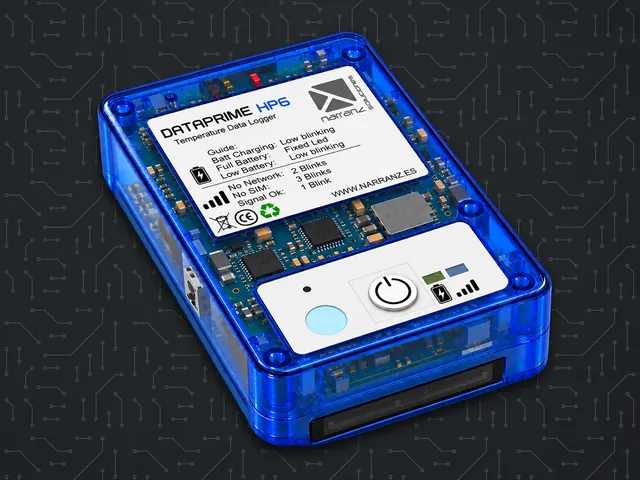
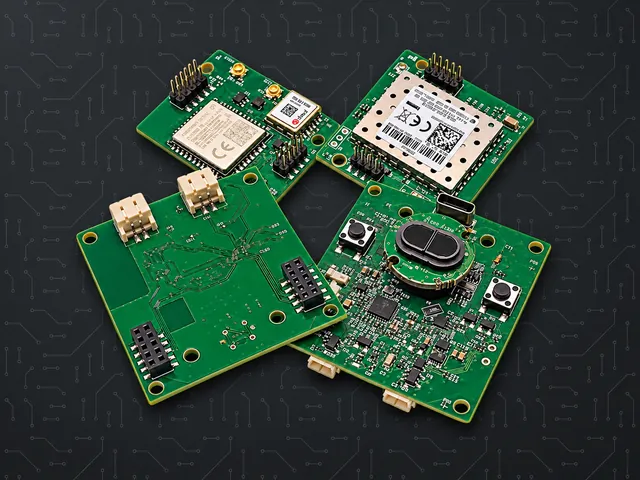
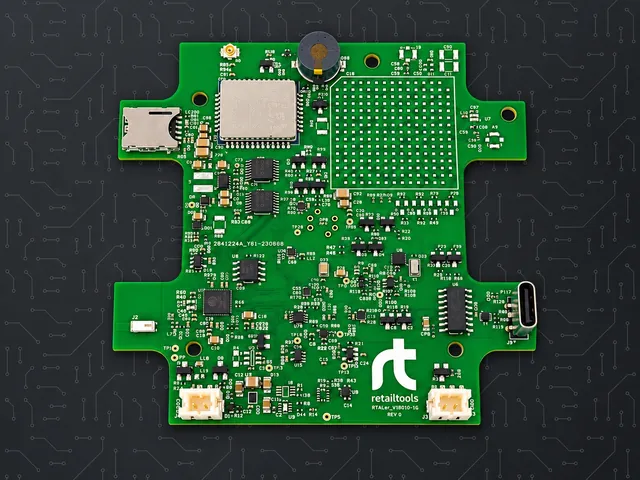
The system provides BLE indoor positioning through RSSI positioning of each tag, combining BLE tag detection by distributed BLE antennas with local processing. This enables BLE asset tracking and indoor asset location, with NB-IoT alarms that integrate into industrial IoT solutions.
The solution uses RSSI (Received Signal Strength Indicator) measurements from different BLE antennas to determine the presence of a tag, assess changes in its position and detect movement between coverage zones.
The smart antennas connect over RS485 to a central concentrator based on an ARM architecture. The concentrator processes the incoming information and features NB-IoT connectivity, transmitting events and alarms in real time to remote servers and IoT platforms.
BLE tag detection with Bluetooth Low Energy
Each antenna periodically scans the BLE devices within its coverage area and gathers information on the transmissions from the different tags.
The system individually identifies the configured tags and records parameters such as RSSI signal strength, receiving antenna, time of detection and how the signal evolves over time.
This information shows which antennas are detecting each device and establishes its presence within the different supervised areas.
RSSI-based indoor positioning
Receiving the same tag simultaneously from several antennas allows the RSSI values to be used as a reference for estimating its relative position within the monitored environment.
Rather than relying on a single reception point, the concentrator can compare the signal strength from different antennas and analyse how it changes over time.
This architecture identifies zone changes, movements or significant changes in the position of a given BLE tag.
In applications where certain assets must remain stationary, the system can set a reference position or zone and automatically raise an alarm when it detects a significant change from the previously recorded conditions.
Asset movement detection
One of the platform's main applications is asset supervision using BLE tags.
Each asset can be fitted with its own tag. The system keeps track of the antennas that normally detect it and the signal levels characteristic of its location.
When the algorithm determines that a sufficiently significant change has occurred, it can generate a movement or position-change event.
This makes it possible to implement supervision systems that detect unauthorised movement of equipment, tools, devices or other assets within industrial facilities, warehouses, buildings or controlled premises.
Distributed smart BLE antennas
The architecture uses multiple smart BLE antennas strategically distributed across the area to be monitored.
Each antenna receives the Bluetooth frames locally and provides the concentrator with the information needed to identify the detected tags and evaluate their RSSI levels.
Using multiple reception points extends the monitored area and divides an installation into separate BLE detection zones.
The distributed architecture also makes it easy to adapt the system to installations of different sizes by adding or rearranging antennas.
RS485 network over UTP cable
Communication between the concentrator and the BLE antennas runs over an RS485 bus, a technology particularly well suited to industrial communications and to connections over longer distances than typical local electronic buses.
Wiring uses UTP cable, which carries both the RS485 communications and the power supply to the antennas.
This reduces the cabling required to deploy the infrastructure, as each antenna receives power and communications through a single physical connection.
An RS485 bus also allows multiple antennas to share the same communication system through an architecture that is robust for fixed installations.
ARM-based concentrator
The concentrator is the central element of the network and uses an ARM processing architecture.
Its role is to manage communications with the antennas, collect BLE detections, process RSSI values and run the algorithms needed to identify relevant changes in tag positions.
Local processing generates events and alarms directly on the device, avoiding the need to stream all raw data to the cloud continuously.
This Edge IoT architecture reduces communications traffic and enables a fast response to detected events.
NB-IoT connectivity
The concentrator features NB-IoT communications, providing direct connectivity with servers and IoT platforms without requiring any local communications infrastructure.
When the system detects a movement, zone change or any other condition configured as an alarm, the concentrator can immediately transmit the event to the remote server over the mobile network.
The message can include information such as tag ID, detecting antennas, RSSI levels, associated zone, event date and time, and alarm type.
This connectivity allows the system to be integrated into remote monitoring platforms, asset management systems and centralised alarm systems.
Bluetooth Low Energy
Bluetooth Low Energy (BLE) allows compact, low-power tags to be used.
BLE is particularly well suited to asset identification and tracking systems in which tags must operate for long periods on small-capacity batteries.
The system can be designed to work with specific BLE tags or adapted to different beacon formats depending on the application requirements.
Edge processing and local alarm generation
Information received from the antennas can be processed directly in the concentrator using RSSI evaluation algorithms and configurable rules.
Local processing distinguishes between small, normal fluctuations in the radio signal and changes significant enough to indicate a possible movement.
When the configured conditions are met, the system generates a local alarm, which is then reported to the server over NB-IoT.
This approach reduces unnecessary communications and allows algorithms to be tailored to each installation.
Scalable architecture
The distributed design allows the solution to be adapted to the size and layout of each installation.
Additional BLE antennas can be deployed in strategic zones to increase coverage or improve discrimination between areas.
The concentrator centralises communications and provides a single link between the local BLE infrastructure and the remote IoT platform.
This supports installations ranging from small premises to asset monitoring systems spread across multiple zones.
Applications
The system is aimed primarily at indoor positioning, asset movement detection, BLE asset tracking, equipment control, tool supervision, industrial asset protection, warehouse monitoring and detection of location changes indoors.
It can also serve as a technology platform for Industry 4.0, logistics, smart buildings and IoT infrastructure applications that need to combine BLE, local processing and mobile communications.
Technical specifications
| Main function | BLE tag detection and supervision |
|---|---|
| Radio technology | Bluetooth Low Energy |
| Positioning parameter | RSSI |
| Positioning | Indoor / relative position by zone |
| Concentrator architecture | ARM |
| Antennas | Distributed smart BLE antennas |
| Antenna-concentrator link | RS485 |
| Cabling | UTP |
| Antenna power supply | Via UTP cabling |
| Remote communications | NB-IoT |
| Processing | Edge / local |
| Events | Presence, movement and zone change |
| Alarms | Local generation and remote notification |
| Integration | Servers and IoT platforms |
| Applications | Asset tracking, Industry 4.0, logistics and security |