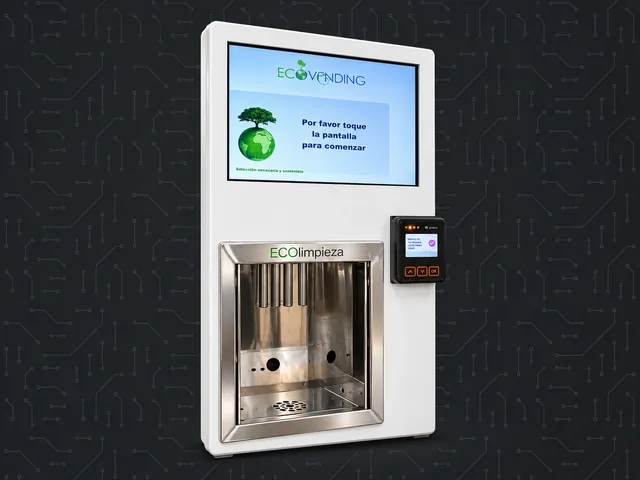
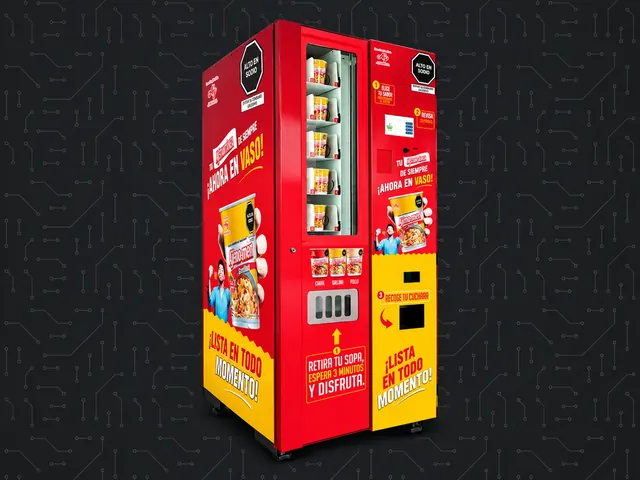
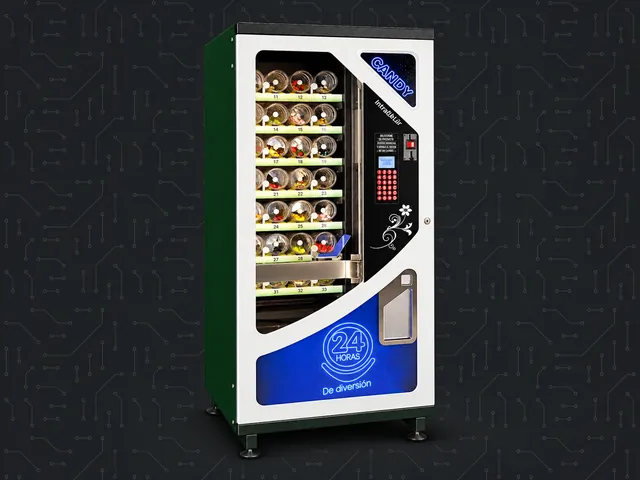
The platform is the basis of a capsule recycling machine for coffee capsule recycling that performs automated waste sorting with no operator intervention. Capsule recognition and automatic capsule sorting run locally using machine vision for recycling, in an Edge Computing architecture suited to Reverse Vending, smart recycling, incentivised recycling, Smart Waste and circular economy projects.
The system uses a dual ARM + x86 architecture, designed to separate the machine's real-time control functions from the compute-intensive tasks associated with machine vision.
The ARM subsystem running MQX manages the peripherals, sensors, actuators, mechanical elements, MDB payment devices and thermal printer. In parallel, an x86 platform running Linux executes the image acquisition, processing and recognition algorithms that identify each capsule.
Once the capsule type has been determined, the ARM subsystem controls the sorting flaps to direct the capsule automatically into one of the two available compartments.
The platform also features Ethernet and 4G communications, allowing the machine to connect to remote monitoring, telemetry and centralised management systems.
Dual ARM + x86 architecture
The electronics are based on a heterogeneous architecture that combines two specialised processing platforms.
The ARM + MQX subsystem is dedicated to machine control and provides the deterministic behaviour needed to manage sensors, actuators, mechanisms and peripherals.
The x86 + Linux subsystem provides the processing power needed to run the machine vision and capsule recognition algorithms.
The functional split can be summarised as:
- ARM + MQX
- Machine control, sensors, actuators, payments and peripherals
- x86 + Linux
- Machine vision, image processing and recognition
This architecture prevents the computational load of image processing from interfering with the machine's electromechanical control functions.
Machine vision recognition
The sorting core uses a machine vision system to identify the type of capsule inserted automatically.
When a batch of capsules enters the machine, the system acquires their image in the inspection area.
The image is transferred to the x86 subsystem, where the necessary algorithms analyse its visual characteristics and determine the corresponding category.
The classification result is then sent to the ARM controller, which physically executes the sorting sequence.
The complete process can be represented as:
- Insertion
- Image capture
- x86/Linux processing
- Recognition
- Communication with ARM
- Flap actuation
- Sorting
x86 platform with Linux for machine vision
Image processing functions run on an x86 platform with the Linux operating system.
This architecture offers a flexible environment with enough processing power to implement advanced Machine Vision, image analysis and automatic object recognition algorithms.
Linux also simplifies the integration of cameras, image processing libraries, communication services, diagnostic tools and applications specific to the sorting system.
Separating the vision platform from the machine controller allows the recognition algorithms to evolve without changing the low-level control functions.
This makes it easier to add new capsule types, improve existing algorithms or introduce artificial intelligence and machine learning techniques in future.
Machine control with ARM and MQX
The ARM subsystem with MQX acts as the controller for the machine's physical elements.
The processor manages the sensors, actuators, sorting mechanisms, peripheral communications, payment devices and other auxiliary devices.
MQX organises the different functions as independent tasks and provides a suitable environment for processes that require controlled response times.
Mechanical operations therefore remain decoupled from the compute-intensive tasks carried out by the x86 system.
Automatic sorting into two compartments
Once the capsule type has been identified, the ARM controller determines which compartment it should be sent to.
The machine incorporates a set of electronically actuated flaps that automatically select one of the two available destinations.
The ARM controls the corresponding mechanical sequence and coordinates the sensors and actuators needed to complete the operation.
This mechanism provides automatic separation of the waste based on the result obtained by machine vision.
Sensor and actuator control
The ARM subsystem manages the machine's various electromechanical elements.
Sensors report the state of the mechanisms and detect the presence or position of capsules at each stage of the process.
Actuators drive the flaps and other mechanisms needed to transport or sort the waste.
Sensor feedback makes it possible to verify that each phase has been executed correctly and to implement diagnostic functions for potential faults.
Thermal ticket printer
The ARM controller also manages a thermal printer, which can issue receipts for completed operations.
The ticket can include information about the recycling operation or be used to support promotions, codes, discounts or reward schemes.
This extends the machine's potential use in incentivised recycling and loyalty programmes.
Ethernet communications
The platform has Ethernet connectivity, allowing the machine to be integrated into local networks and connected to servers or management platforms.
Ethernet can be used to transmit operational information, statistics, operating states and diagnostic data.
It also simplifies maintenance and configuration when the machine is installed within a network infrastructure.
4G mobile connectivity
Built-in 4G communications allow the machine to be deployed in locations where no Ethernet connection is available.
Mobile connectivity provides access to remote services and allows geographically distributed units to be integrated into a single centralised platform.
This is particularly useful when deploying a network of recycling machines in shopping centres, supermarkets, stations or other public spaces.
Telemetry and remote monitoring
Ethernet and 4G connectivity enable telemetry and remote monitoring functions.
The machine can report information on its operation, such as the number of operations performed, capsules processed, categories identified, mechanism states, alarms and faults.
This information can be centralised on a management platform to simplify the operation and maintenance of a fleet of machines.
Recycling statistics
Because capsules are identified individually, the system can generate detailed information on the waste processed.
Data such as the total number of capsules collected, breakdown by type, operations performed and machine usage over time can be recorded.
This data is useful for analysing recycling campaigns, sizing collection operations and assessing the performance of different locations.
Diagnostics and maintenance
The dual architecture makes it easier to implement advanced diagnostic functions.
The ARM subsystem can monitor the mechanical elements, sensors, actuators, payment devices and printer, while the x86 platform can provide information on the cameras and image processing.
This separation makes it possible to distinguish between faults in the electromechanical control and problems with the machine vision system.
Ethernet and 4G communications also allow alarms and states to be sent to remote maintenance platforms.
Edge architecture
Machine vision processing is carried out locally on the x86 Linux platform, so capsules are sorted directly in the machine.
This Edge Computing architecture reduces dependence on external services for the recognition process and keeps the main sorting logic local.
Server connectivity can be reserved for telemetry, updates, maintenance, statistics and centralised management.
Circular economy and smart recycling
Combining machine vision, automatic sorting and IoT connectivity turns a conventional collection point into a smart system capable of identifying, separating and counting waste.
The platform can be integrated into circular economy, Smart Waste and Reverse Vending projects, providing information on the materials collected and automating their sorting.
The option of adding payment devices and a thermal printer also makes it possible to develop incentivised recycling schemes that link capsule returns to rewards or promotions.
Scalability and system evolution
Separating the ARM and x86 subsystems makes it easier for the platform to evolve technologically.
Mechanical and control functions can remain stable on the ARM subsystem while the machine vision algorithms evolve independently on Linux.
New software versions can be introduced, the database of recognised capsules extended or more advanced algorithms deployed without a complete redesign of the control electronics.
Applications
The system is aimed in particular at coffee capsule recycling machines, Reverse Vending, smart collection points, incentivised recycling and automated waste sorting systems.
The architecture can also be adapted to other applications that need to combine machine vision recognition, electromechanical sorting and remote connectivity.
The same technological approach can therefore be used to develop automatic sorting systems for different types of objects or waste.
Technical specifications
| Architecture | Dual ARM + x86 |
|---|---|
| Control processor | ARM |
| ARM operating system | MQX |
| ARM functions | Machine control, sensors, actuators and peripherals |
| Vision platform | x86 |
| x86 operating system | Linux |
| x86 functions | Machine vision and image processing |
| Identification | Automatic image-based recognition |
| Vision processing | Local / Edge |
| Sorting | 2 compartments |
| Sorting mechanism | Electronically controlled flaps |
| Sensor control | ARM |
| Actuator control | ARM |
| Payment systems | MDB |
| MDB role | Master |
| Cashless | Can be integrated |
| Printer | Thermal |
| Ethernet | Yes |
| Mobile communications | 4G |
| Telemetry | Yes |
| Remote monitoring | Yes |
| Application | Smart recycling / Reverse Vending |